Air Fryer Lemon Pepper Salmon – Fast, Fresh, and Full of Flavor
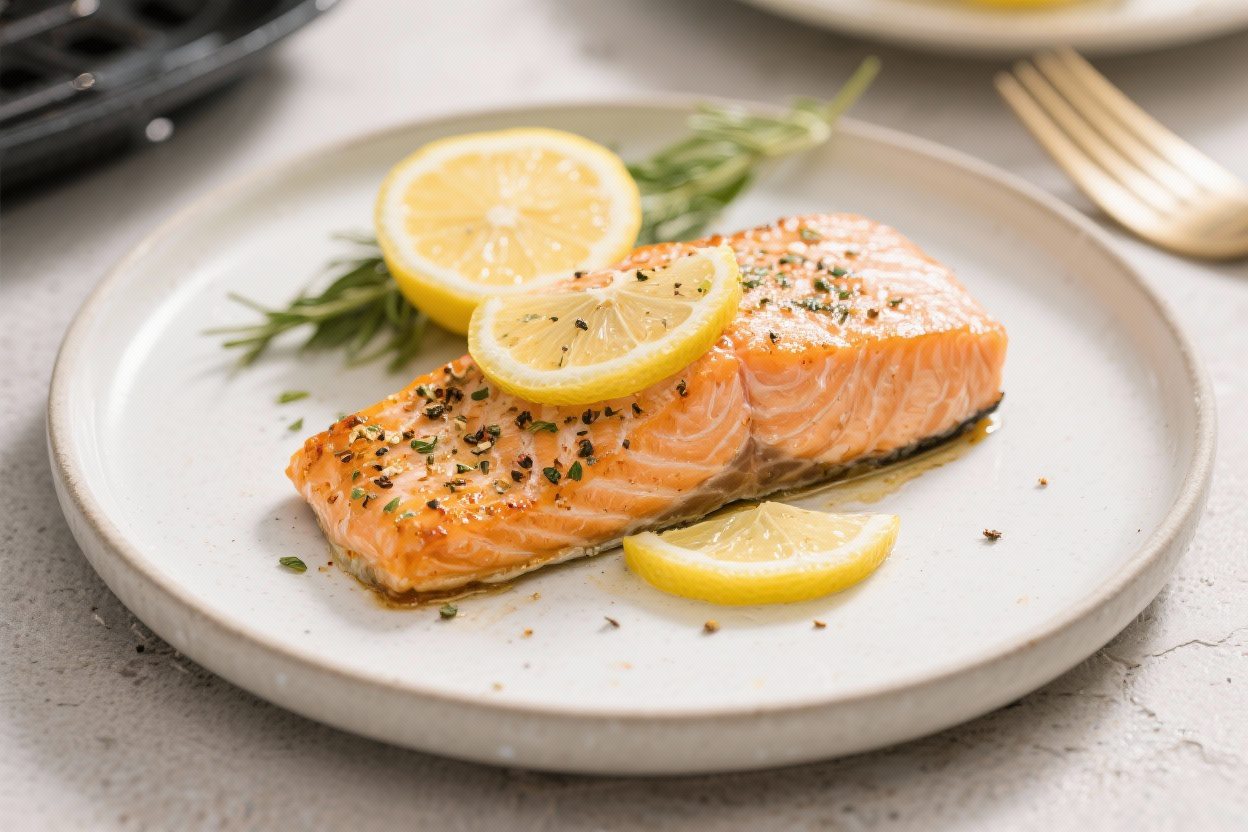
If you’re craving a quick weeknight dinner that tastes restaurant-worthy, lemon pepper salmon in the air fryer is a winner. It’s flaky, juicy, and bright with citrus, and it comes together in under 20 minutes. No splattering oil, no babysitting a pan, and cleanup is simple.
Whether you’re cooking for one or feeding a family, this is the kind of recipe that makes healthy eating feel effortless.
Ingredients
Method
- Preheat the air fryer. Set it to 400°F (200°C) and let it run for 3–5 minutes. A hot basket promotes better browning.
- Prepare the salmon. Pat the fillets dry with paper towels. Drying helps the seasoning stick and prevents steaming.
- Season generously. Rub the salmon with olive oil. Sprinkle on lemon pepper seasoning, garlic powder, salt, and a little black pepper if needed. Grate fresh lemon zest over the top for extra zing.
- Prep the basket. Lightly spray the air fryer basket with cooking spray, or lay down a perforated parchment liner designed for air fryers.
- Arrange the fillets. Place salmon in the basket skin-side down if using skin-on fillets. Leave a bit of space between pieces so air can circulate.
- Air fry. Cook for 7–10 minutes at 400°F, depending on thickness. Thinner fillets (about 1 inch thick) may finish at 7 minutes; thicker pieces may need up to 10.
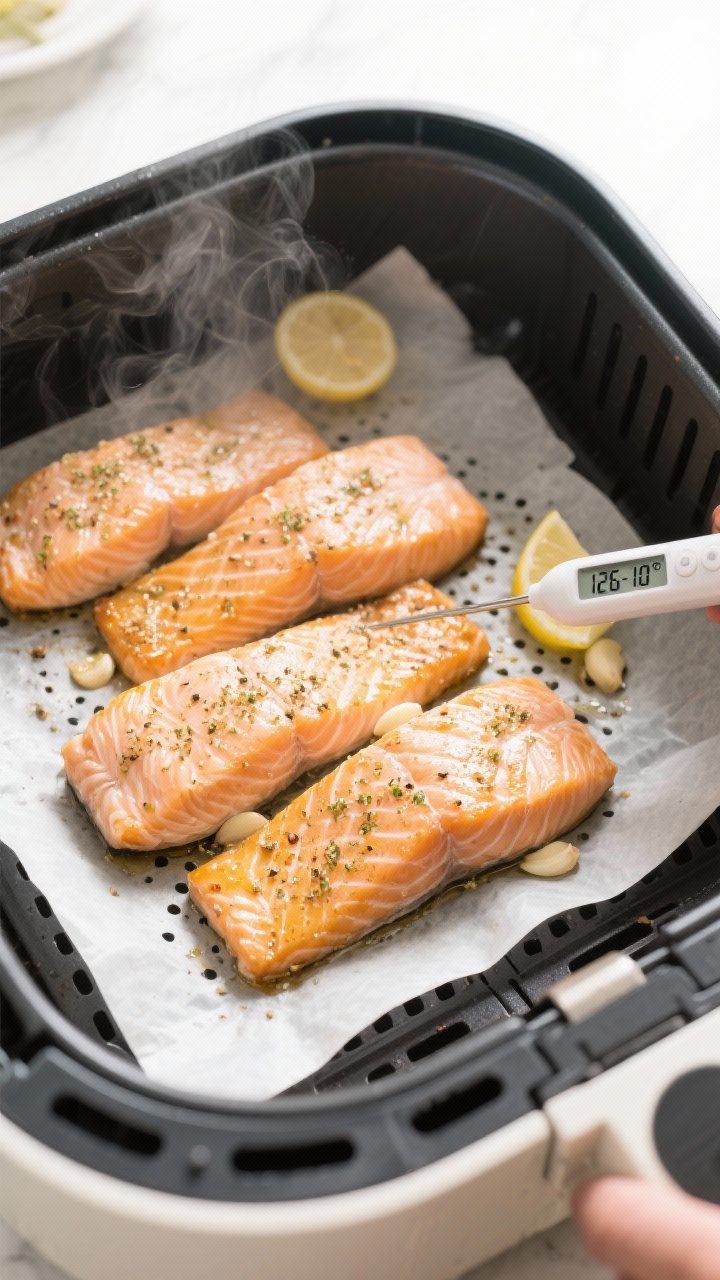
- Check for doneness. The salmon should flake easily with a fork and reach an internal temperature of 125–130°F for medium or 140°F for well-done, depending on your preference. It will carryover-cook a little as it rests.
- Finish with lemon. Squeeze fresh lemon juice over the cooked salmon. Add chopped parsley or dill for a bright, fresh finish.
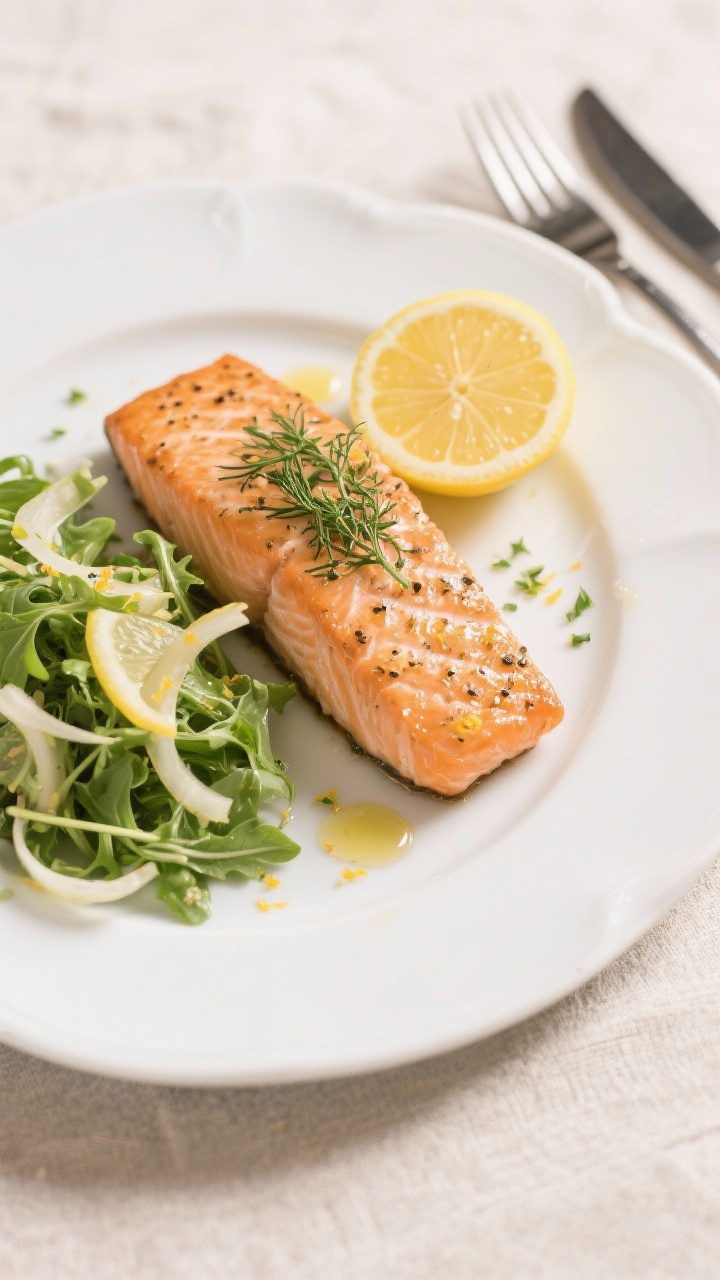
- Serve. Pair with simple sides like roasted vegetables, a green salad, rice, or quinoa.
Why This Recipe Works
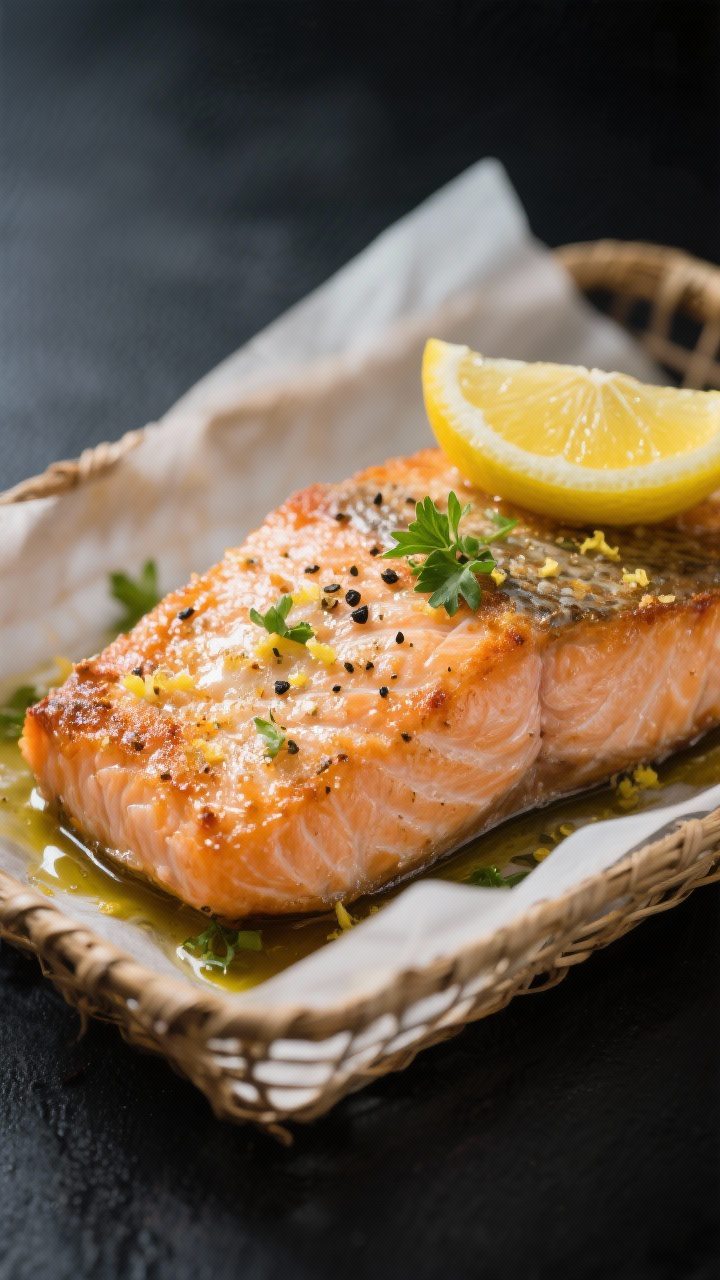
This recipe strikes the right balance between speed and flavor. The air fryer circulates hot air around the salmon, giving it a lightly crisp exterior while keeping the inside tender and flaky. A simple lemon pepper blend adds brightness without overpowering the fish.
A touch of olive oil helps the seasoning stick and keeps the salmon moist. Fresh lemon zest pushes the citrus flavor forward, while a final squeeze of juice wakes everything up just before serving.
Shopping List
- Salmon fillets (4 fillets, 5–6 ounces each; skin-on or skinless)
- Olive oil (1–2 tablespoons)
- Lemon (1 large; you’ll use the zest and juice)
- Lemon pepper seasoning (1–1.5 teaspoons)
- Garlic powder (1/2 teaspoon)
- Kosher salt (to taste; start with 1/2 teaspoon)
- Black pepper (optional, to taste if your lemon pepper is mild)
- Fresh parsley or dill (optional, for garnish)
- Cooking spray (for the air fryer basket, if needed)
How to Make It
- Preheat the air fryer. Set it to 400°F (200°C) and let it run for 3–5 minutes. A hot basket promotes better browning.
- Prepare the salmon. Pat the fillets dry with paper towels.
Drying helps the seasoning stick and prevents steaming.
- Season generously. Rub the salmon with olive oil. Sprinkle on lemon pepper seasoning, garlic powder, salt, and a little black pepper if needed. Grate fresh lemon zest over the top for extra zing.
- Prep the basket. Lightly spray the air fryer basket with cooking spray, or lay down a perforated parchment liner designed for air fryers.
- Arrange the fillets. Place salmon in the basket skin-side down if using skin-on fillets.
Leave a bit of space between pieces so air can circulate.
- Air fry. Cook for 7–10 minutes at 400°F, depending on thickness. Thinner fillets (about 1 inch thick) may finish at 7 minutes; thicker pieces may need up to 10.
- Check for doneness. The salmon should flake easily with a fork and reach an internal temperature of 125–130°F for medium or 140°F for well-done, depending on your preference. It will carryover-cook a little as it rests.
- Finish with lemon. Squeeze fresh lemon juice over the cooked salmon.
Add chopped parsley or dill for a bright, fresh finish.
- Serve. Pair with simple sides like roasted vegetables, a green salad, rice, or quinoa.
Storage Instructions
Let leftover salmon cool to room temperature, then store it in an airtight container in the fridge for up to 3 days. For best results, reheat gently in the air fryer at 320°F for 3–4 minutes or in the microwave at 50% power in short bursts. You can also enjoy it cold, flaked over salads or tucked into a grain bowl.
Freezing is possible for up to 2 months, but texture is best when eaten fresh; thaw overnight in the fridge before reheating.
Health Benefits
- Rich in omega-3s: Salmon provides EPA and DHA, which support heart health, brain function, and reduce inflammation.
- High-quality protein: A fillet offers a satisfying protein boost that helps with satiety and muscle recovery.
- Vitamin D and B vitamins: Salmon is one of the few natural food sources of vitamin D and also supplies B12 and niacin.
- Lemon and herbs: Fresh lemon adds vitamin C and bright flavor without extra calories, while herbs offer antioxidants.
- Air frying vs. pan frying: Using less oil can help reduce overall calories while still delivering great texture and taste.
Common Mistakes to Avoid
- Skipping the dry-off step: Wet fish steams instead of browns. Patting dry improves texture and helps seasoning stick.
- Overcrowding the basket: Give the fillets breathing room so hot air can circulate. Cook in batches if needed.
- Overcooking: Salmon cooks fast in an air fryer.
Start checking at 7 minutes and use a thermometer if you can.
- Using old lemon pepper: Spices lose flavor over time. Fresh lemon zest makes a big difference if your seasoning is mild.
- Skipping the final lemon squeeze: That last hit of acid brightens the dish and balances the richness of the salmon.
Alternatives
- Different seasonings: Try Cajun seasoning and lime, garlic-herb butter with chives, or a maple-soy glaze for a sweet-savory twist.
- Butter or ghee: Swap olive oil for melted butter or ghee for a richer flavor. Add a pinch of crushed red pepper for heat.
- Fresh vs. frozen salmon: Frozen fillets work well; thaw overnight and pat dry.
If cooking from frozen, add 3–4 minutes and season halfway through once the surface thaws slightly.
- Skin-on vs. skinless: Skin-on helps retain moisture and lifts cleanly from a well-sprayed basket. If skinless, consider a parchment liner to prevent sticking.
- Citrus swap: Use lime or orange zest and juice for a different flavor profile, adjusting seasoning to taste.
- Protein swap: This method works for trout, Arctic char, or halibut. Adjust cook time based on thickness.
FAQ
Do I need to marinate the salmon?
No, a marinade isn’t necessary.
The lemon pepper seasoning, fresh zest, and olive oil provide plenty of flavor, and the air fryer locks in moisture. If you want extra citrus punch, let the seasoned salmon rest for 10–15 minutes before cooking.
What if my salmon has a white protein film after cooking?
That white substance is albumin, a harmless protein that can appear when fish cooks quickly. To reduce it, avoid overcooking and let the salmon rest at room temperature for 10–15 minutes before air frying.
A gentle cook and quick rest usually minimize it.
Can I cook the salmon with vegetables in the air fryer?
Yes, but choose quick-cooking vegetables like asparagus or thin green beans and toss them with oil and salt. Add them around the salmon if there’s space or cook them first for 5 minutes, then add the salmon and finish together.
How do I know when salmon is done without a thermometer?
Press the top gently with a fork. If it flakes easily and the center is just opaque, it’s done.
The flesh should still look moist and not dry or chalky.
Is farmed or wild salmon better for this recipe?
Both work well. Wild salmon is leaner and may cook a bit faster, while farmed salmon tends to be richer and stays moist longer. Adjust cook time and keep an eye on doneness either way.
Can I make this recipe dairy-free and gluten-free?
Yes.
As written, it’s naturally dairy-free and gluten-free, but double-check your lemon pepper blend for any added gluten-containing fillers. Most are fine.
What sides go best with lemon pepper salmon?
Great options include garlic roasted broccoli, a lemony arugula salad, herbed couscous, rice pilaf, or quinoa. A dollop of Greek yogurt mixed with dill and lemon makes a quick sauce.
Should I flip the salmon in the air fryer?
It isn’t necessary.
Cooking skin-side down allows the flesh to cook gently and evenly. If your air fryer runs hot, you can flip for the last minute, but it’s optional.
Final Thoughts
Air Fryer Lemon Pepper Salmon is the kind of recipe that rewards you with big flavor for minimal effort. With a short ingredient list and a fast cook time, it fits any busy schedule.
Keep a lemon, a reliable lemon pepper blend, and a few fillets on hand, and you’ve always got a simple, healthy meal ready to go. Once you try it, you’ll probably add it to your weekly rotation.
Printable Recipe Card
Want just the essential recipe details without scrolling through the article? Get our printable recipe card with just the ingredients and instructions.