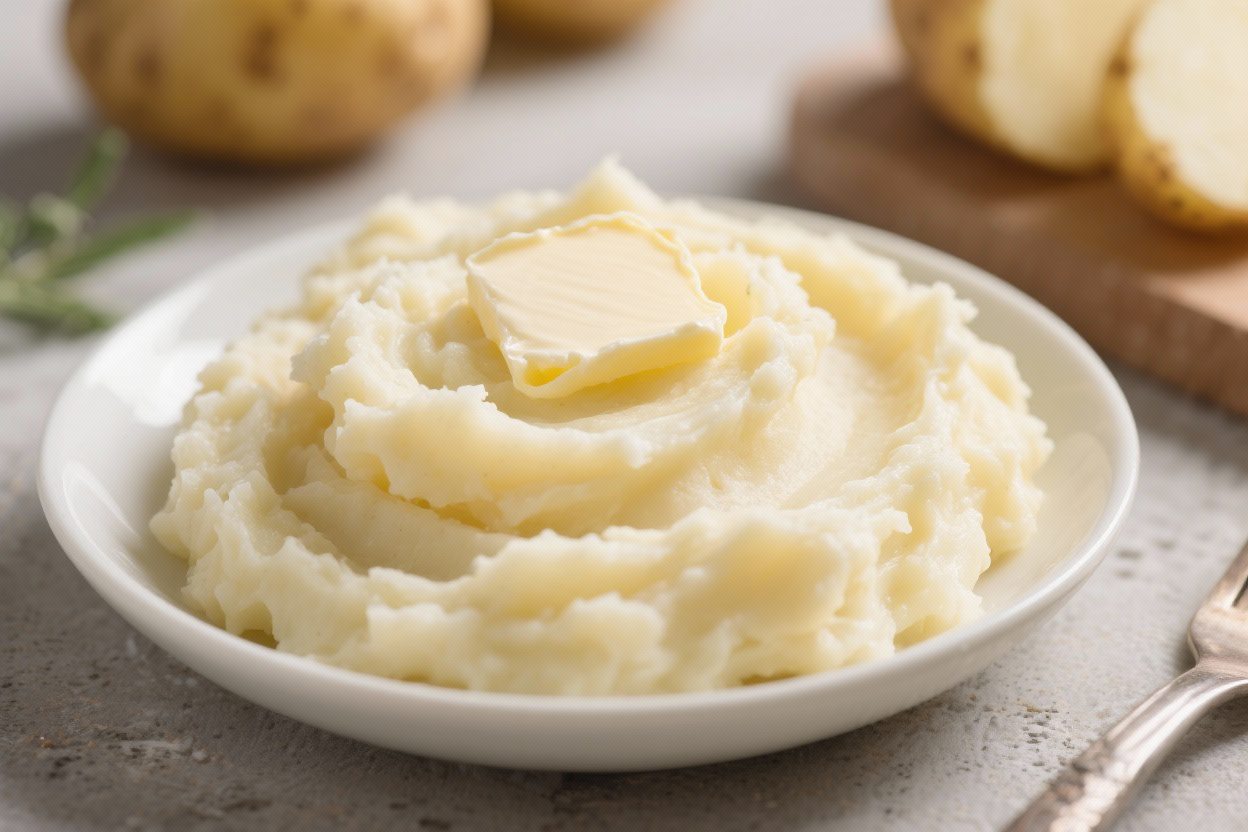
Creamy Mashed Potatoes With Butter – Comforting, Smooth, and Simple
Mashed potatoes are the kind of side dish that make any meal feel a little more special. Soft, buttery, and soothing, they bring a sense of calm to the table. This recipe keeps things classic and focuses on texture and taste—smooth, rich, and full of flavor without being heavy.
If you’ve ever struggled with gluey or bland potatoes, this method will help you get it right every time. It’s easy, dependable, and perfect for weeknights or holidays.
Ingredients
Method
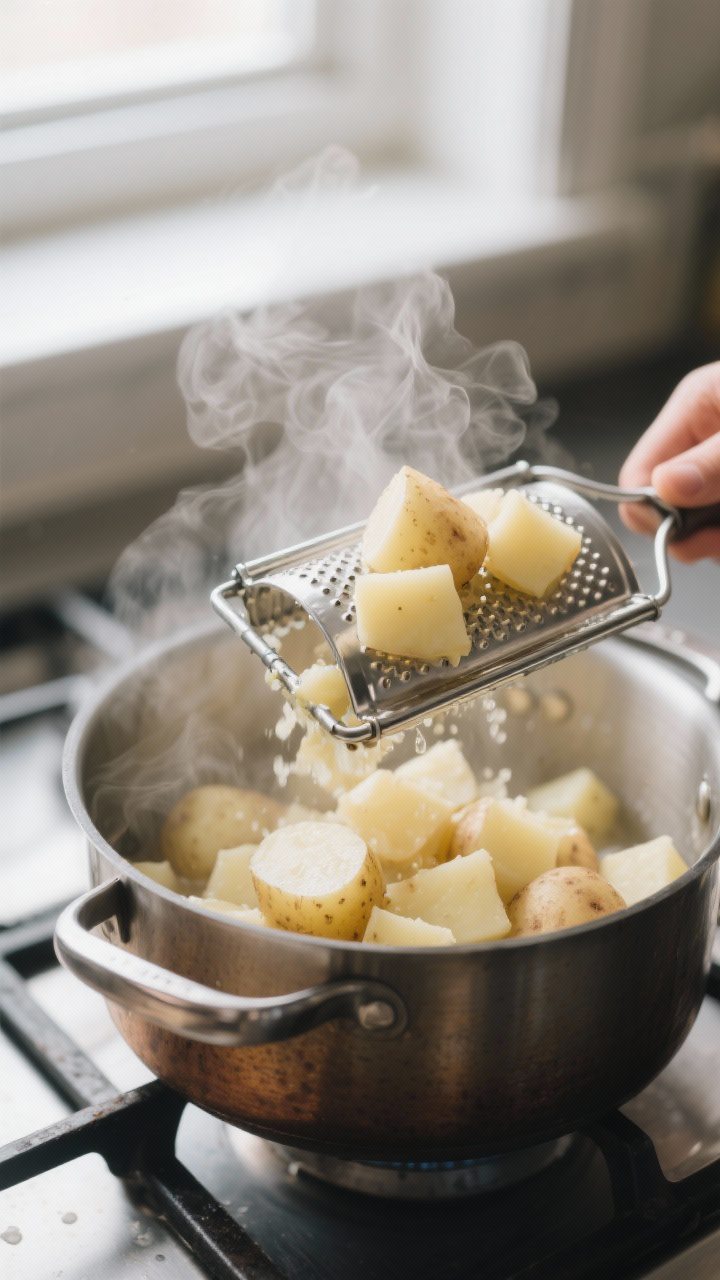
- Prep the potatoes: Peel and cut the potatoes into even chunks so they cook at the same rate. Rinse briefly under cold water to remove surface starch.
- Start in cold water: Place the potatoes in a large pot and cover with cold water by about an inch. Add 1 tablespoon salt. Starting cold helps the potatoes cook evenly.
- Boil until tender: Bring to a gentle boil and cook 12–18 minutes, until a fork slides in easily with no resistance. Don’t overcook or they’ll get waterlogged.
- Warm the dairy: While the potatoes cook, melt the butter in a small saucepan. Add the milk (and sour cream or heavy cream if using) and heat gently until warm. Warm dairy blends in better and keeps the texture smooth.
- Drain well and dry: Drain the potatoes thoroughly. Return them to the hot pot and set over low heat for 1–2 minutes, shaking the pot, to steam off excess moisture.
- Mash while hot: Use a potato masher, ricer, or food mill to mash the potatoes. For the smoothest texture, a ricer or food mill is best.
- Add butter first: Pour in the melted butter and stir gently with a spatula until absorbed. Butter coats the starches and helps prevent gumminess.
- Add warm milk gradually: Stir in the warm milk a little at a time until you reach your desired creaminess. You may not need all of it.
- Season: Add salt and pepper. Taste and adjust. If you want richer flavor, stir in another tablespoon of butter.
- Finish and serve: Transfer to a warm bowl, dot with a little butter, and sprinkle with chopped chives or parsley if you like. Serve right away.
What Makes This Recipe So Good
- Perfect texture: Cooking the potatoes just right and mashing them while hot gives a creamy, light result.
- Rich, buttery flavor: Warm butter and cream blend in smoothly, so every bite is silky and flavorful.
- Simple ingredients: No complicated steps or special tools—just reliable techniques that work.
- Works with different potatoes: Yukon Golds make it naturally creamy, while Russets make it fluffy. Both are great.
- Easy to scale: Whether you’re cooking for two or for a holiday crowd, the method stays the same.
Ingredients
- 2 pounds Yukon Gold or Russet potatoes, peeled and cut into 1 1/2-inch chunks
- 6 tablespoons unsalted butter, plus more to taste
- 1/2 to 3/4 cup whole milk or half-and-half, warmed
- 1/4 cup sour cream or heavy cream (optional for extra richness)
- 1 to 1 1/2 teaspoons kosher salt, plus more to finish
- 1/2 teaspoon freshly ground black pepper
- Chives or parsley, finely chopped (optional, for garnish)
Instructions
- Prep the potatoes: Peel and cut the potatoes into even chunks so they cook at the same rate.
Rinse briefly under cold water to remove surface starch.
- Start in cold water: Place the potatoes in a large pot and cover with cold water by about an inch. Add 1 tablespoon salt. Starting cold helps the potatoes cook evenly.
- Boil until tender: Bring to a gentle boil and cook 12–18 minutes, until a fork slides in easily with no resistance.
Don’t overcook or they’ll get waterlogged.
- Warm the dairy: While the potatoes cook, melt the butter in a small saucepan. Add the milk (and sour cream or heavy cream if using) and heat gently until warm. Warm dairy blends in better and keeps the texture smooth.
- Drain well and dry: Drain the potatoes thoroughly.
Return them to the hot pot and set over low heat for 1–2 minutes, shaking the pot, to steam off excess moisture.
- Mash while hot: Use a potato masher, ricer, or food mill to mash the potatoes. For the smoothest texture, a ricer or food mill is best.
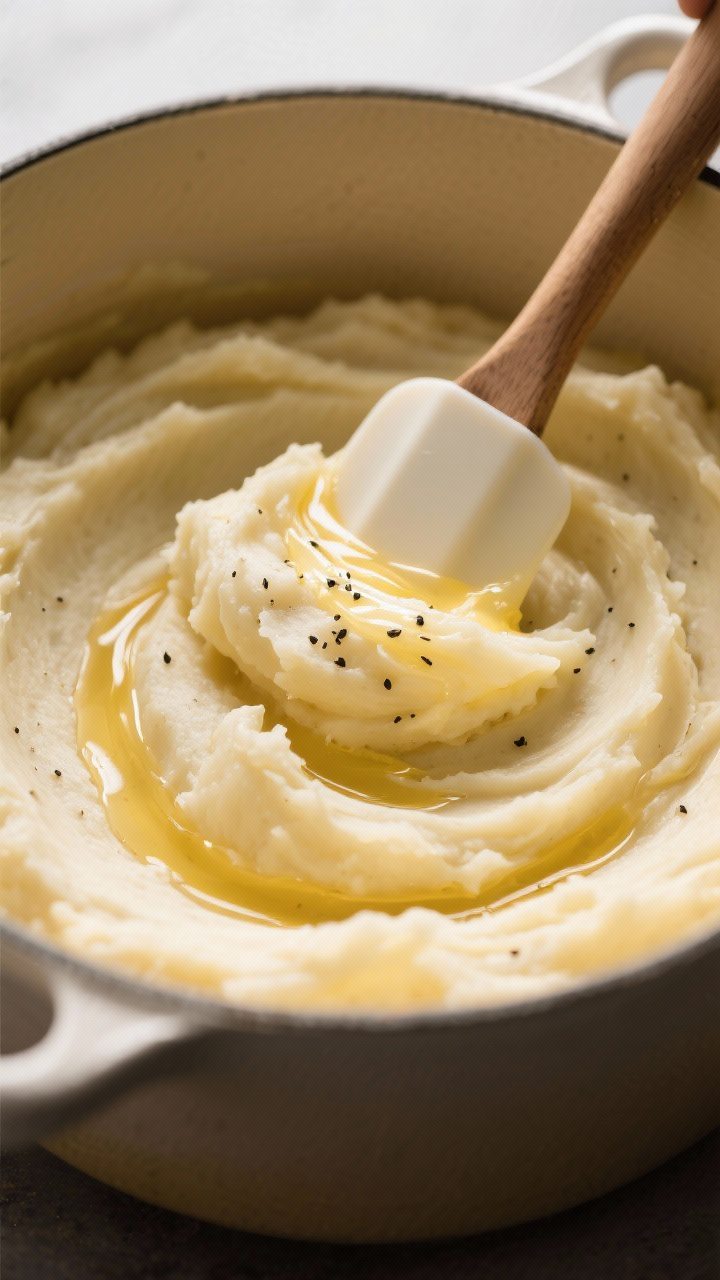
- Add butter first: Pour in the melted butter and stir gently with a spatula until absorbed. Butter coats the starches and helps prevent gumminess.
- Add warm milk gradually: Stir in the warm milk a little at a time until you reach your desired creaminess.
You may not need all of it.
- Season: Add salt and pepper. Taste and adjust. If you want richer flavor, stir in another tablespoon of butter.
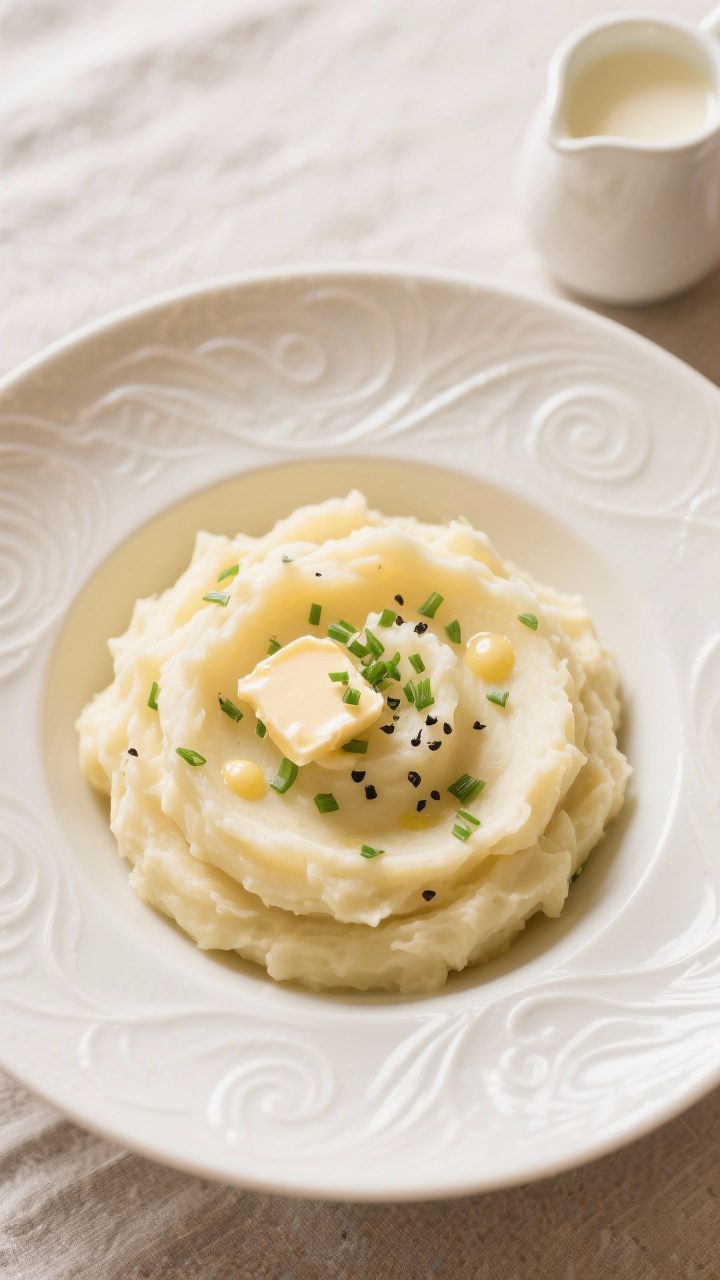
- Finish and serve: Transfer to a warm bowl, dot with a little butter, and sprinkle with chopped chives or parsley if you like.
Serve right away.
How to Store
- Refrigerate: Cool completely, then store in an airtight container for up to 3 days.
- Reheat gently: Warm on the stove over low heat or in the microwave at 50% power, stirring occasionally. Add a splash of milk or cream to loosen.
- Make-ahead tip: For holidays, make the potatoes earlier in the day. Keep warm in a covered, oven-safe dish at 200°F (about 93°C), stirring in a little warm cream right before serving.
- Freezing: You can freeze mashed potatoes with added cream and butter for up to 1 month, but the texture may be slightly less smooth after thawing.
Reheat slowly with extra dairy.
Benefits of This Recipe
- Comforting and familiar: This is a classic side that pairs with roasted meats, grilled fish, sautéed veggies, or a simple salad.
- Budget-friendly: Potatoes, butter, and milk are affordable and easy to find.
- Flexible for diets: You can use lactose-free milk or ghee for dairy-sensitive eaters, or olive oil for a lighter version.
- Great for gatherings: Scales up easily and holds well in a warm oven or slow cooker.
Common Mistakes to Avoid
- Starting with hot water: This cooks the outside too fast and leaves the inside firm. Always start with cold water.
- Overworking the potatoes: Using a blender or food processor will make them gluey. Stick to a masher, ricer, or food mill.
- Adding cold dairy: Cold milk or butter can cause the potatoes to seize and turn pasty.
Warm your dairy first.
- Skipping the drying step: Not letting the potatoes steam off extra moisture leads to watery mash. Return them to the pot to dry briefly.
- Underseasoning: Potatoes need more salt than you think. Season the cooking water and adjust after mashing.
Variations You Can Try
- Garlic mashed potatoes: Simmer 4–6 smashed garlic cloves in the milk and butter, then strain before adding.
- Brown butter mash: Brown the butter until nutty and golden, then add.
It adds a deep, toasty flavor.
- Cheddar and chive: Stir in 1 cup shredded sharp cheddar and a handful of chives for a bold, savory twist.
- Parmesan and black pepper: Add 1/2 cup finely grated Parmesan and a generous grind of pepper for a cacio e pepe feel.
- Olive oil and herb: Replace half the butter with good olive oil and fold in chopped parsley and thyme.
- Buttermilk tang: Swap in warmed buttermilk for part of the milk for a gentle tang and lighter texture.
FAQ
Which potato is best for creamy mashed potatoes?
Yukon Golds are a great all-around choice because they’re naturally creamy and buttery. Russets make fluffier mashed potatoes with a lighter feel. You can also mix the two to get both creaminess and lift.
Can I make mashed potatoes without a ricer?
Yes.
A hand masher works well, especially if you don’t mind a few tiny lumps. Just mash gently and avoid over-stirring to prevent gumminess.
How do I keep mashed potatoes warm for a crowd?
Keep them in a covered dish in a low oven (around 200°F/93°C). Stir in a bit of warm cream or milk before serving to refresh the texture.
A slow cooker on “warm” also works.
Why are my mashed potatoes gluey?
That happens when the starch gets overworked. Using a blender or stirring too much can do it. Mash while hot, add butter first, and fold in warm milk gently.
How much salt should I use?
Salt the cooking water generously—like you would for pasta—so the potatoes are seasoned from the inside.
Then taste and adjust after mashing. It usually ends up being around 1 to 1 1/2 teaspoons, depending on your dairy and butter.
Can I make them dairy-free?
Yes. Use a rich plant-based milk (like unsweetened almond or oat) and a dairy-free butter or good olive oil.
Warm them before adding, just like with regular dairy.
Is peeling necessary?
Not required. If you like a bit of texture and a more rustic style, leave the skins on, especially with Yukon Golds. Just scrub them well and cut into even pieces.
Final Thoughts
Creamy mashed potatoes with butter are simple, comforting, and endlessly adaptable.
With a few small techniques—starting in cold water, warming the dairy, and mashing gently—you’ll get that smooth, rich texture every time. Keep this recipe in your back pocket for busy weeknights or big celebrations. It’s the kind of side dish that quietly makes the whole meal better.
Printable Recipe Card
Want just the essential recipe details without scrolling through the article? Get our printable recipe card with just the ingredients and instructions.