Lemon Pepper Salmon (High-Protein Dinner) – Bright, Zesty, and Satisfying
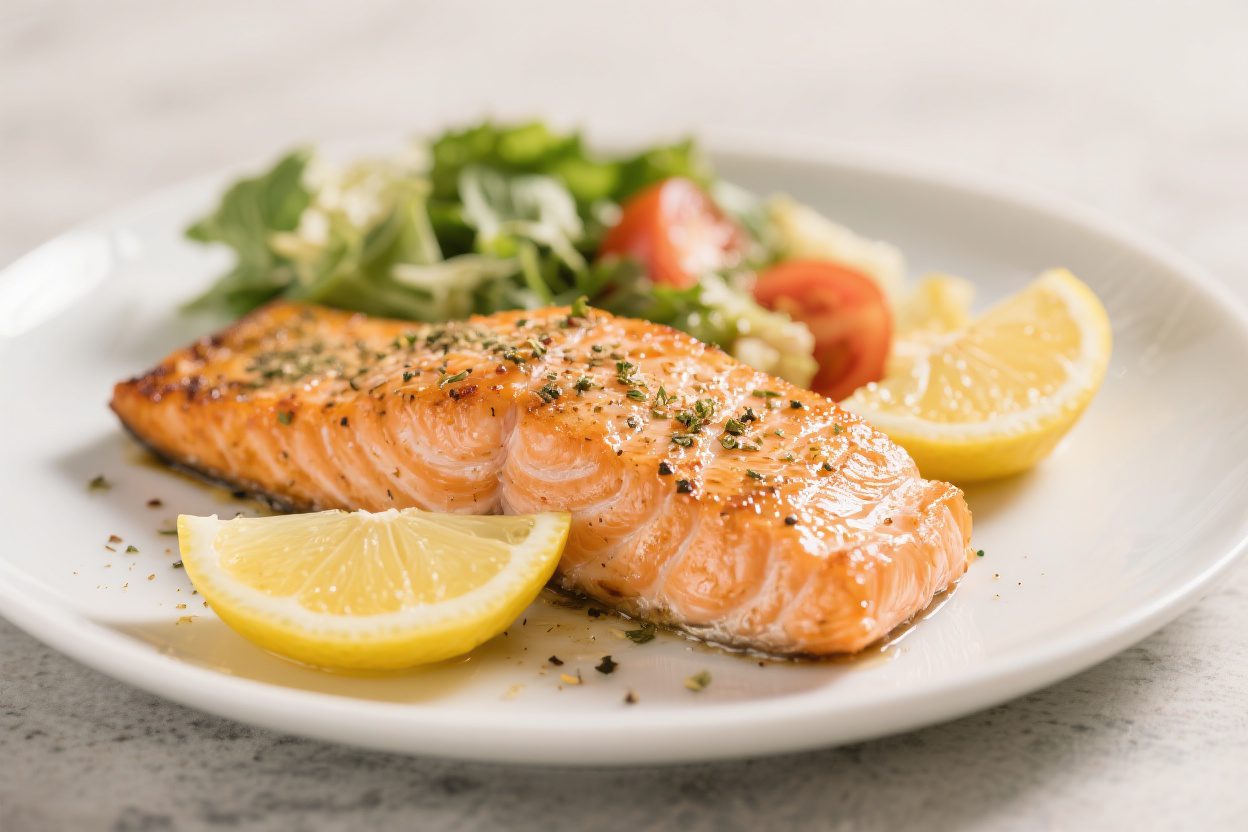
This lemon pepper salmon keeps weeknight dinner simple without feeling basic. It’s bright, zesty, and comes together fast, but still feels special enough for company. You’ll get a crisp, peppery crust on the outside and tender, flaky fish inside.
Pair it with a quick vegetable and a grain, and you’ve got a complete, high-protein meal. If you’re looking for a go-to salmon recipe that never fails, this is it.
Ingredients
Method
- Preheat the oven: Set it to 400°F (205°C). This lets you finish the salmon gently after searing.
- Pat salmon dry: Use paper towels to remove excess moisture. Dry fish browns better and prevents sticking.
- Make the seasoning mix: In a small bowl, combine olive oil, lemon zest, half the lemon juice, black pepper, salt, garlic powder (or minced garlic), and onion powder if using. If you like a stronger citrus-pepper vibe, add the lemon pepper seasoning.
- Coat the salmon: Brush or rub the mix evenly on all sides. If using skin-on fillets, focus most of it on the flesh side and a little on the skin to help it crisp.
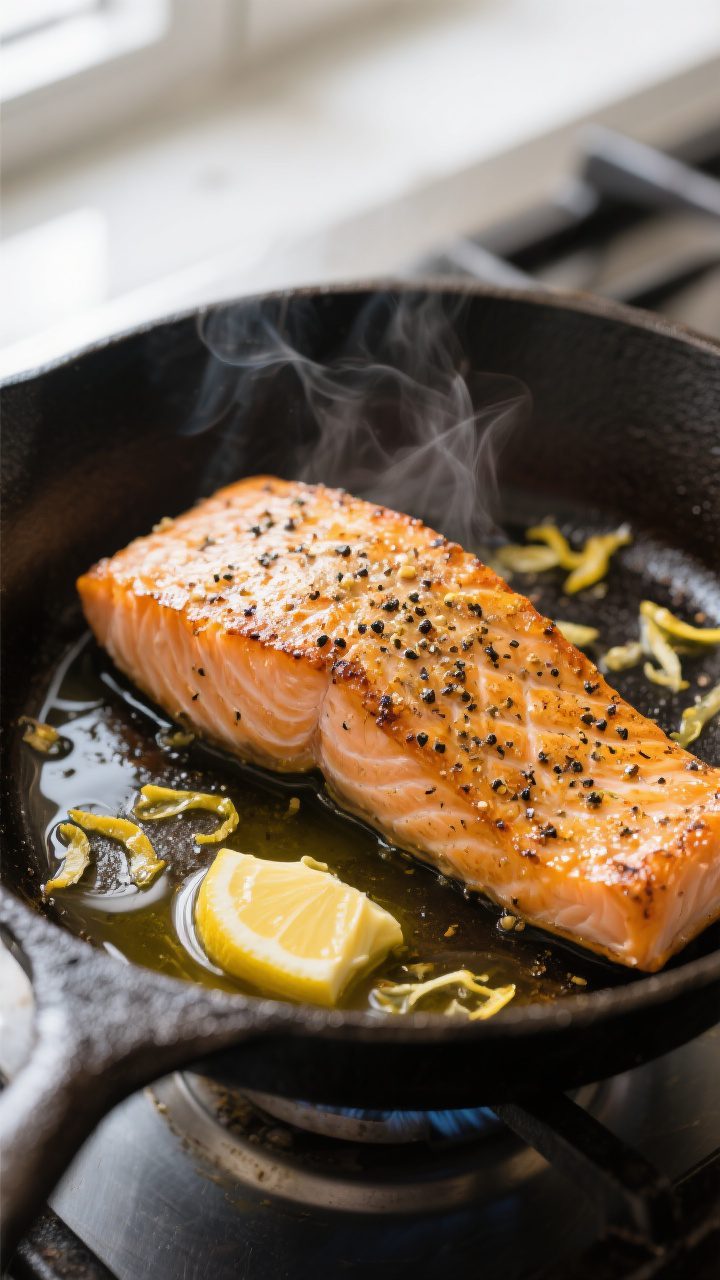
- Heat the pan: Place a large oven-safe skillet (cast iron works well) over medium-high heat. Add a thin layer of olive oil. When the oil shimmers, it’s ready.
- Sear the salmon: Place fillets in the pan, flesh side down if skin-on. Don’t move them for 2–3 minutes. You’re looking for a golden crust and easy release.
- Flip and finish: Gently flip the fillets (skin side down now if applicable) and slide the skillet into the oven. Roast 5–8 minutes, depending on thickness, until the salmon is just opaque and flakes easily with a fork.
- Check doneness: For the most precise result, use a thermometer. Target 125–130°F (52–54°C) for medium, or 135°F (57°C) if you prefer more done. The temperature will rise slightly after resting.
- Rest and finish with lemon: Remove from the oven and rest 2–3 minutes. Squeeze the remaining lemon juice over the top and sprinkle with herbs.
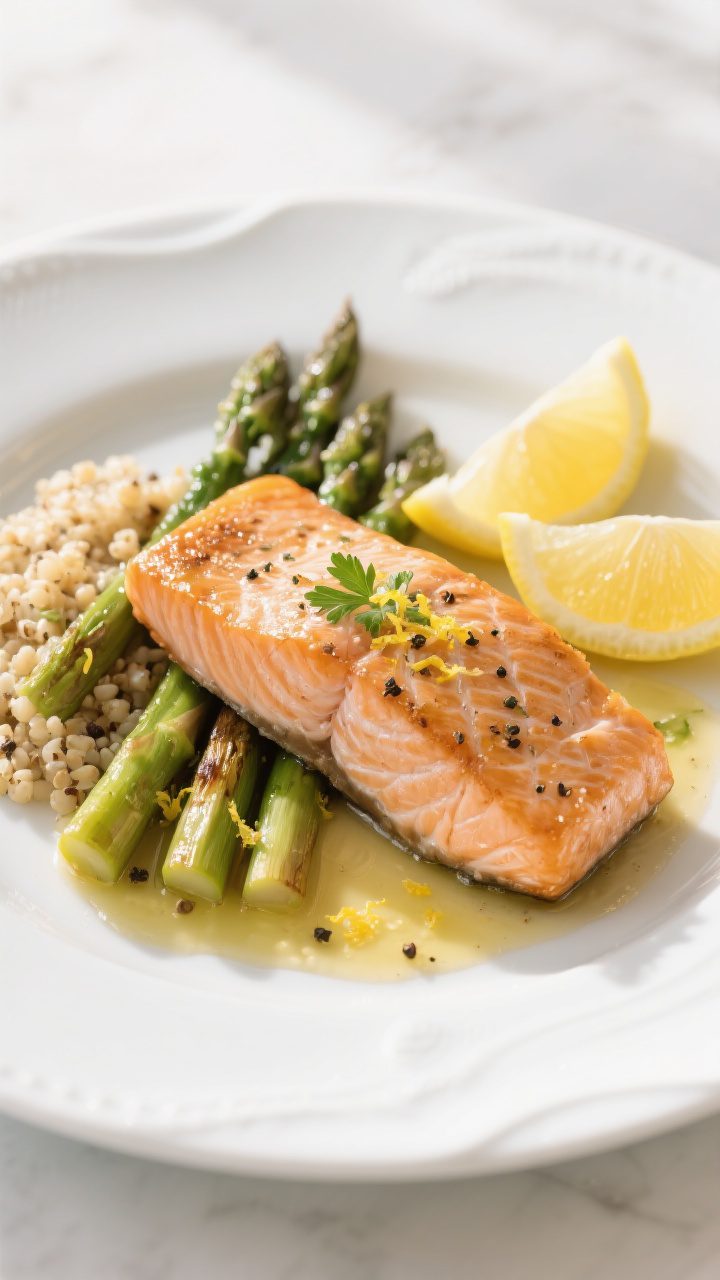
- Serve: Plate with lemon wedges. Good sides include roasted broccoli, asparagus, green beans, or a quick salad, plus rice, quinoa, or potatoes.
What Makes This Recipe So Good
- Big flavor, low effort: Lemon zest, cracked black pepper, and garlic bring freshness and heat with just minutes of prep.
- High in protein: A standard 6-ounce fillet packs around 34–38 grams of protein, so it’s great for workouts or balanced eating.
- Foolproof texture: A quick sear and brief oven finish keep the salmon juicy without guesswork.
- Flexible: Works with skin-on or skinless fillets, fresh or frozen, and any side you like.
- Clean ingredients: Olive oil, lemon, and spices keep it light and wholesome.
What You’ll Need
- 4 salmon fillets (about 6 ounces each), skin-on or skinless
- 2 tablespoons olive oil (plus a little more for the pan)
- 1 large lemon (zest and juice), plus extra wedges for serving
- 1–1½ teaspoons freshly cracked black pepper (adjust to taste)
- 1 teaspoon kosher salt
- 1 teaspoon garlic powder or 2 cloves fresh garlic, finely minced
- 1 teaspoon onion powder (optional)
- 1 teaspoon lemon pepper seasoning (optional, for extra punch)
- Fresh parsley or chives, chopped (optional, for garnish)
Step-by-Step Instructions
- Preheat the oven: Set it to 400°F (205°C). This lets you finish the salmon gently after searing.
- Pat salmon dry: Use paper towels to remove excess moisture. Dry fish browns better and prevents sticking.
- Make the seasoning mix: In a small bowl, combine olive oil, lemon zest, half the lemon juice, black pepper, salt, garlic powder (or minced garlic), and onion powder if using.
If you like a stronger citrus-pepper vibe, add the lemon pepper seasoning.
- Coat the salmon: Brush or rub the mix evenly on all sides. If using skin-on fillets, focus most of it on the flesh side and a little on the skin to help it crisp.
- Heat the pan: Place a large oven-safe skillet (cast iron works well) over medium-high heat. Add a thin layer of olive oil.
When the oil shimmers, it’s ready.
- Sear the salmon: Place fillets in the pan, flesh side down if skin-on. Don’t move them for 2–3 minutes. You’re looking for a golden crust and easy release.
- Flip and finish: Gently flip the fillets (skin side down now if applicable) and slide the skillet into the oven.
Roast 5–8 minutes, depending on thickness, until the salmon is just opaque and flakes easily with a fork.
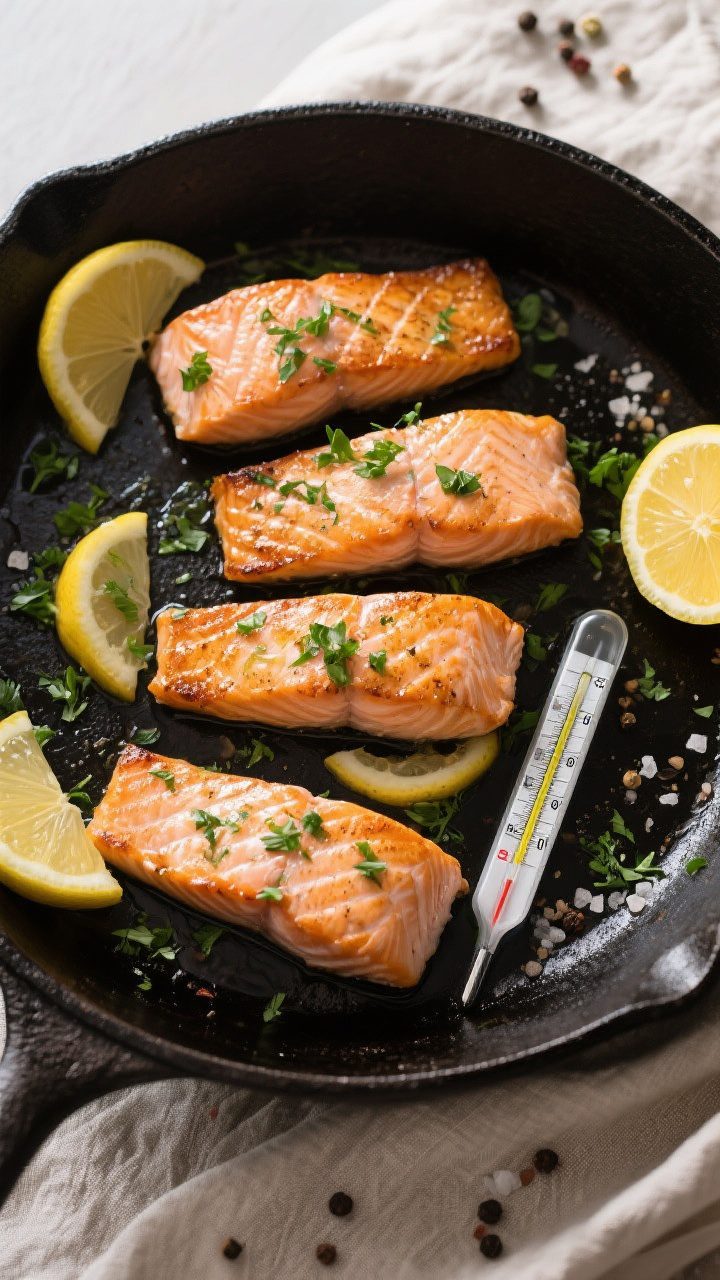
- Check doneness: For the most precise result, use a thermometer. Target 125–130°F (52–54°C) for medium, or 135°F (57°C) if you prefer more done. The temperature will rise slightly after resting.
- Rest and finish with lemon: Remove from the oven and rest 2–3 minutes. Squeeze the remaining lemon juice over the top and sprinkle with herbs.
- Serve: Plate with lemon wedges.
Good sides include roasted broccoli, asparagus, green beans, or a quick salad, plus rice, quinoa, or potatoes.
Keeping It Fresh
- Storage: Cool completely, then refrigerate in an airtight container for up to 3 days.
- Reheating: Warm gently in a 275°F (135°C) oven for 10–12 minutes or until just heated through. Avoid the microwave if you can—it can dry the fish.
- Freezing: Cooked salmon can be frozen for up to 2 months. Wrap tightly and thaw overnight in the fridge.
Quality is best when eaten fresh, but frozen works for meal prep.
- Meal prep tip: Flake leftover salmon over greens with extra lemon and olive oil for a quick lunch, or stir into brown rice with steamed veg and a squeeze of lemon.
Why This Is Good for You
- High-quality protein: Supports muscle repair, satiety, and stable energy.
- Omega-3 fats: Salmon is rich in EPA and DHA, which support heart, brain, and joint health.
- Lower sodium, higher flavor: Lemon zest and pepper bring brightness without relying on heavy salt.
- Balanced plate: Pairing with fiber-rich veggies and whole grains keeps you full and nourished.
Common Mistakes to Avoid
- Starting with wet fish: Moisture kills the crust. Pat dry thoroughly before seasoning.
- Overcooking: Salmon goes from perfect to dry fast. Start checking at 5 minutes in the oven.
- Skipping the sear: That quick sear adds flavor and texture you won’t get from baking alone.
- Using bottled lemon juice only: Fresh zest and juice are key to the clean, citrusy flavor.
- Not resting the fish: A couple minutes of rest keeps the juices in the fillet, not on the plate.
- Under-seasoning: Salmon can handle bold pepper and lemon.
Taste and adjust if needed.
Alternatives
- Air fryer: 390°F (200°C) for 7–10 minutes, depending on thickness. Brush with the lemon-pepper mix first.
- Grill: Medium-high heat, oil the grates well. Grill 3–4 minutes per side.
Use a fish spatula and avoid moving too much.
- No-garlic version: Skip garlic and add 1 teaspoon Dijon mustard to the lemon-oil mix for depth.
- Butter finish: Add 1 tablespoon butter to the pan during the last minute for a richer sauce.
- Herb swap: Try dill, tarragon, or basil instead of parsley. Cilantro works if you like a brighter twist.
- Spice boost: Add 1/4 teaspoon red pepper flakes for gentle heat.
- Different fish: Use trout, arctic char, or cod. Adjust cook time; thinner fillets need less.
FAQ
Can I use frozen salmon?
Yes.
Thaw it overnight in the fridge, then pat very dry before seasoning. If you’re short on time, seal in a bag and submerge in cold water for 20–30 minutes, then dry and proceed.
Is farmed or wild salmon better for this?
Both work. Wild salmon is leaner and cooks faster; farmed tends to be richer and a bit more forgiving.
Adjust timing and don’t overcook either.
How do I prevent the salmon from sticking?
Use a well-heated pan with a thin film of oil. Don’t flip too early—once a crust forms, it releases more easily. A fish spatula helps.
What if I don’t have lemon pepper seasoning?
No problem.
The combo of fresh lemon zest, juice, and cracked black pepper delivers the same bright flavor. The seasoning is optional.
How do I know it’s done without a thermometer?
Look for opaque flesh that flakes easily with a fork and light juices. The center can be slightly translucent if you like medium.
Rest a couple minutes before serving.
Can I make a quick sauce?
Yes. After cooking, add a splash of lemon juice and a tablespoon of butter to the hot pan, swirl, and spoon over the salmon. Fresh herbs make it pop.
What sides go best with lemon pepper salmon?
Roasted asparagus, sautéed green beans, a simple arugula salad, or steamed broccoli are great.
For starch, try quinoa, jasmine rice, couscous, or roasted potatoes.
Wrapping Up
Lemon pepper salmon is the kind of weeknight dinner that feels effortless yet delivers real flavor and solid nutrition. With a crisp sear, a gentle oven finish, and plenty of fresh lemon, it hits all the right notes. Keep the ingredients on hand, and you can get a high-protein, satisfying meal on the table in under 30 minutes—no stress, just good food.
Printable Recipe Card
Want just the essential recipe details without scrolling through the article? Get our printable recipe card with just the ingredients and instructions.