Apple Cider (Stovetop) – Cozy, Fragrant, and Easy to Make
Warm, spiced apple cider makes any day feel a little brighter. This stovetop version is simple, fragrant, and fills your kitchen with the best fall aroma. You don’t need fancy equipment—just a pot, some apples, a few spices, and time for a gentle simmer.
It’s naturally sweet, customizable, and perfect for gatherings or quiet nights at home. Make it once, and you’ll want a batch bubbling on the stove all season long.
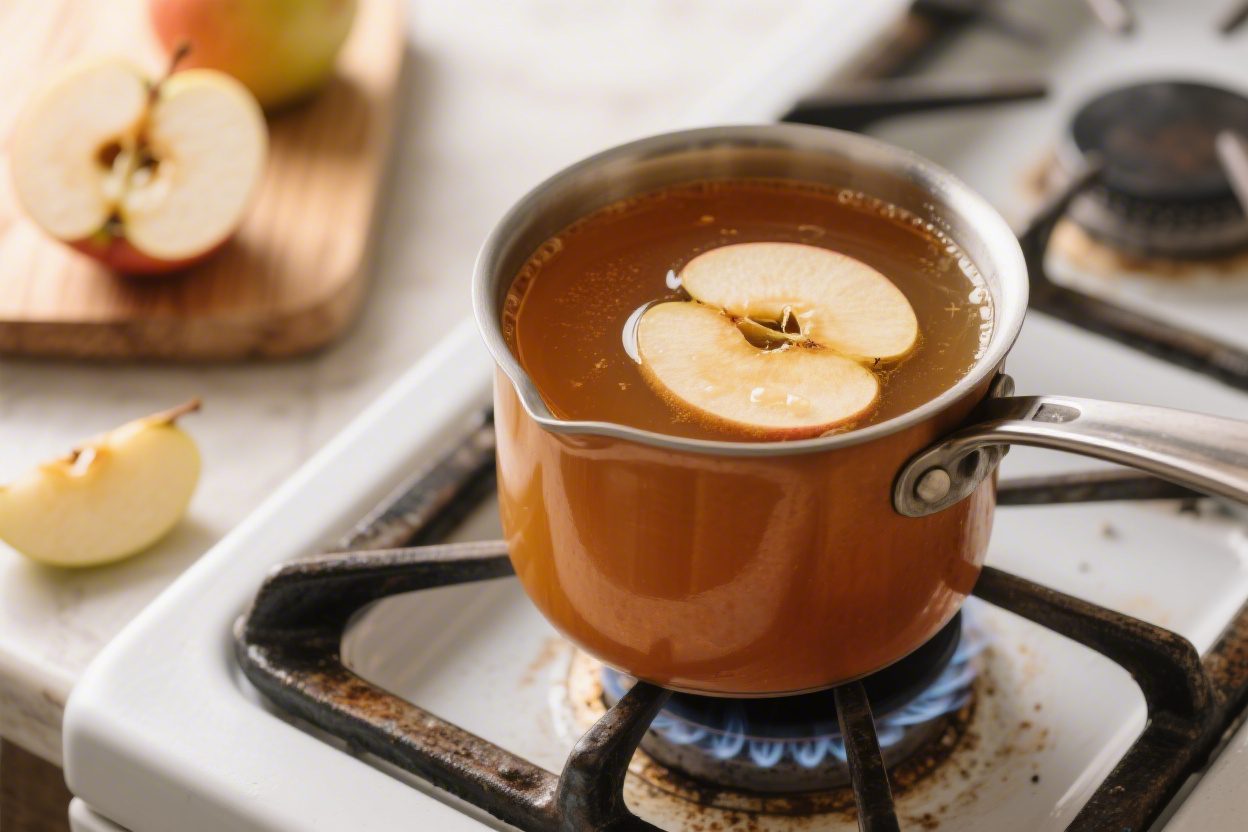
Ingredients
Method
- Prep the fruit: Rinse apples and oranges well. Quarter the apples; no need to peel or core. Slice the orange into rounds. If you prefer less bitterness, peel the orange first.
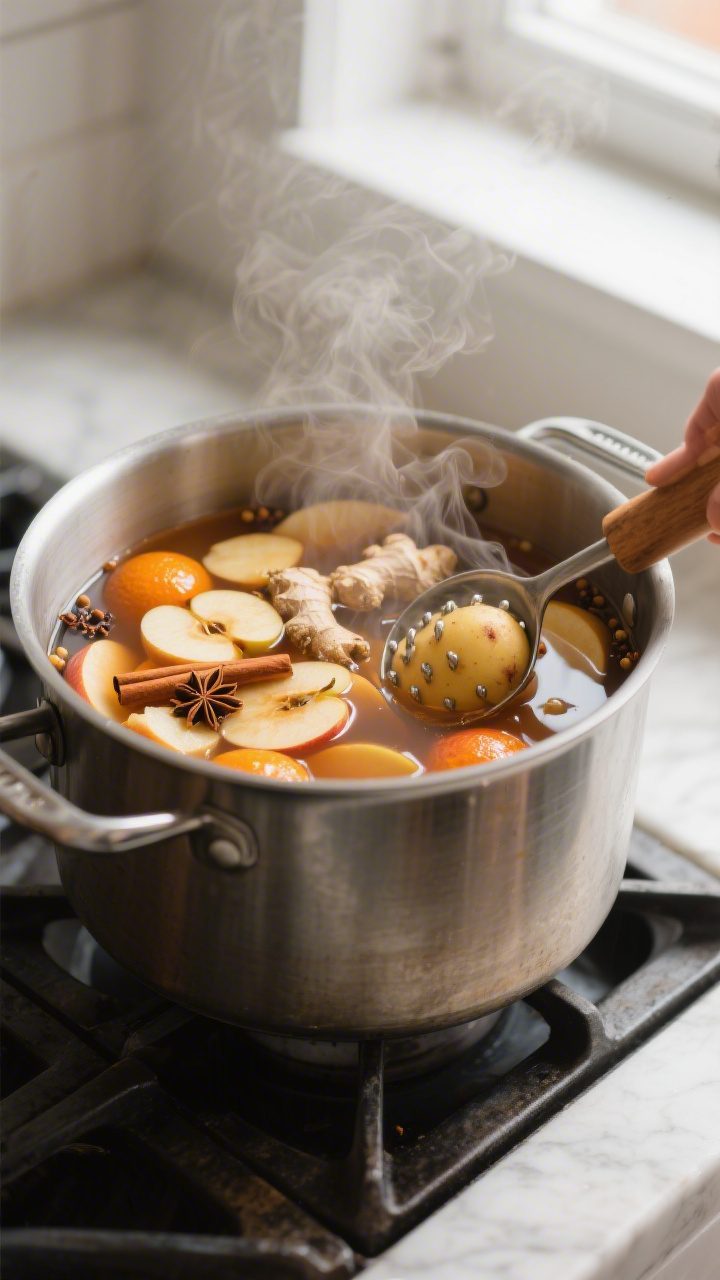
- Load the pot: Add apples, orange slices, cinnamon sticks, cloves, allspice, and ginger to a large stockpot. Pour in enough water to cover the fruit by about an inch (10–12 cups).
- Simmer gently: Bring to a gentle boil over medium-high heat. Reduce to low, cover, and simmer for 1 hour. The fruit should be very soft and fragrant.
- Mash for flavor: Use a potato masher or the back of a spoon to mash the fruit in the pot. This releases more juice and intensifies the flavor.
- Simmer again: Cover and simmer another 30–45 minutes. Taste the liquid; it should be deeply apple-forward with warm spice notes.
- Strain: Set a fine-mesh strainer over a large bowl or another pot. Ladle the cider through, pressing the solids to extract as much liquid as possible. For ultra-smooth cider, strain a second time through cheesecloth.
- Sweeten and finish: Return the strained cider to the pot. Stir in maple syrup, brown sugar, or honey a little at a time. Add vanilla if using. Warm over low heat and adjust sweetness and spice to taste.
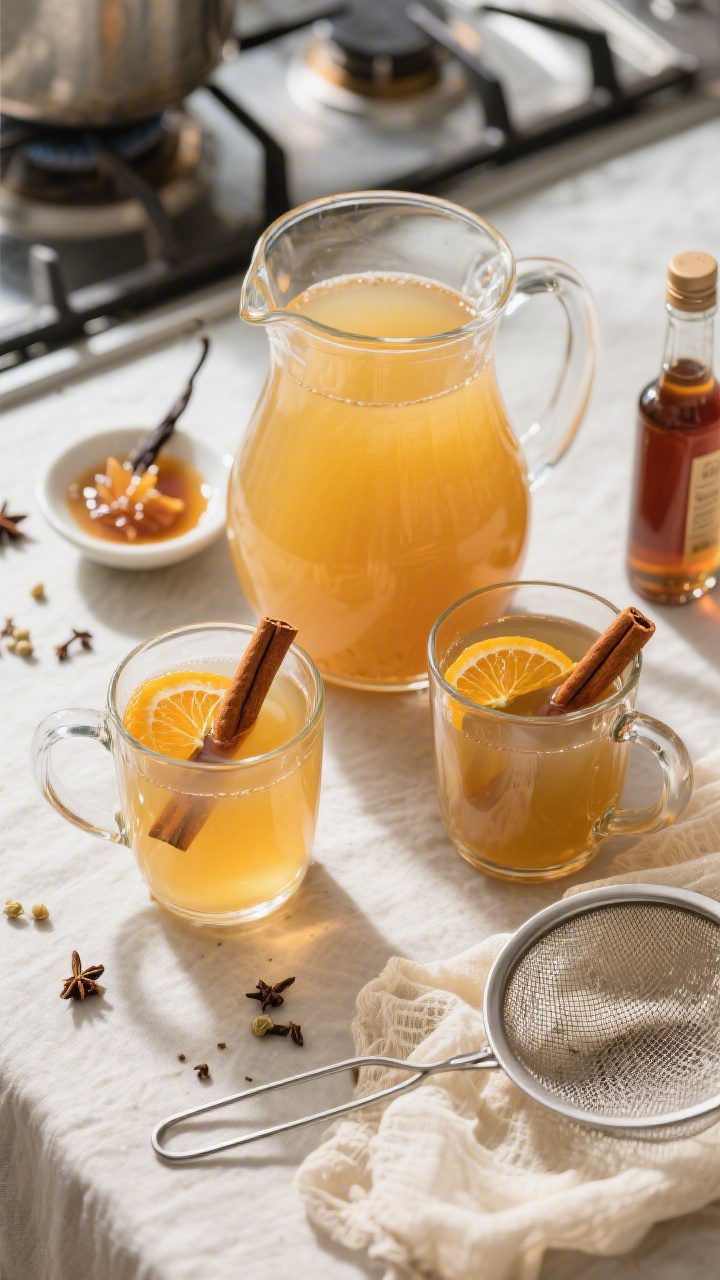
- Serve: Ladle into mugs and garnish with a cinnamon stick or orange peel if you like. Enjoy hot, or cool for iced cider later.
What Makes This Special
This stovetop cider is all about fresh, clean flavors. You use whole fruit and whole spices, so the taste is rich but not overpowering.
It’s a flexible recipe that works with whatever apples you have, and you can easily adjust the sweetness and spice. Plus, it’s a great make-ahead drink for holidays and weekends, and it reheats beautifully. You can even turn leftovers into a cozy base for cocktails.
Shopping List
- Apples (10–12 medium) – A mix is best: sweet (Gala, Fuji, Honeycrisp) and tart (Granny Smith).
About 4–5 pounds total.
- Oranges (1–2) – Adds brightness; use fresh oranges, not juice.
- Cinnamon sticks (3–4)
- Whole cloves (8–10)
- Whole allspice (6–8) – Optional but great for depth.
- Fresh ginger (1–2 inches) – Optional; adds warmth and bite.
- Maple syrup, brown sugar, or honey (to taste) – Start with 2–4 tablespoons; adjust later.
- Vanilla extract (1 teaspoon) – Optional for a soft, rounded finish.
- Water (10–12 cups)
How to Make It
- Prep the fruit: Rinse apples and oranges well. Quarter the apples; no need to peel or core. Slice the orange into rounds.
If you prefer less bitterness, peel the orange first.
- Load the pot: Add apples, orange slices, cinnamon sticks, cloves, allspice, and ginger to a large stockpot. Pour in enough water to cover the fruit by about an inch (10–12 cups).
- Simmer gently: Bring to a gentle boil over medium-high heat. Reduce to low, cover, and simmer for 1 hour.
The fruit should be very soft and fragrant.
- Mash for flavor: Use a potato masher or the back of a spoon to mash the fruit in the pot. This releases more juice and intensifies the flavor.
- Simmer again: Cover and simmer another 30–45 minutes. Taste the liquid; it should be deeply apple-forward with warm spice notes.
- Strain: Set a fine-mesh strainer over a large bowl or another pot.
Ladle the cider through, pressing the solids to extract as much liquid as possible. For ultra-smooth cider, strain a second time through cheesecloth.
- Sweeten and finish: Return the strained cider to the pot. Stir in maple syrup, brown sugar, or honey a little at a time.
Add vanilla if using. Warm over low heat and adjust sweetness and spice to taste.
- Serve: Ladle into mugs and garnish with a cinnamon stick or orange peel if you like. Enjoy hot, or cool for iced cider later.
How to Store
- Refrigerator: Store cooled cider in airtight jars or a pitcher for up to 7 days.
- Freezer: Freeze in containers, leaving headspace, for up to 3 months.
Thaw in the fridge and reheat gently.
- Reheating: Warm on the stovetop over low heat. Avoid boiling to preserve flavor and prevent bitterness.
- Batching: Double the recipe for parties and keep warm in a slow cooker on the “Warm” setting.

Health Benefits
- Vitamin C and antioxidants: Apples and oranges offer antioxidants that support immune health and may reduce oxidative stress.
- Hydration with flavor: Cider delivers fluid with natural fruit flavor, which can encourage you to drink more during colder months.
- Gentle spices: Cinnamon, cloves, and ginger have been linked to digestive comfort and may support healthy blood sugar responses when used in moderation.
- Customizable sweetness: You control the sweetener, so you can keep added sugars low or choose natural options like maple or honey.
Common Mistakes to Avoid
- Overboiling: A hard boil can make the cider taste bitter and dull. Keep the heat low and steady.
- Too many spices: Whole spices are potent.
Measure them and taste before adding more, especially cloves and allspice.
- Skipping the mash: Mashing releases more apple flavor. Don’t skip this step if you want a robust cider.
- Not straining well: Pulp and spice bits can make the cider gritty. Strain at least once through a fine-mesh sieve.
- Adding sweetener too early: The cider concentrates as it simmers.
Sweeten at the end to avoid going too sugary.
Recipe Variations
- Spiced Pear Cider: Swap 2–3 apples for ripe pears. Add a pinch of cardamom for a floral note.
- Cranberry Twist: Add 1 cup fresh cranberries in the first simmer for tartness and a rosy hue.
- Caramel Apple: Stir in 1–2 tablespoons caramel sauce per quart of cider for a dessert-like sip.
- Chai-Inspired: Add 4–5 green cardamom pods and 3–4 whole black peppercorns with the spices.
- Citrus-Free: Skip the orange and add a splash of lemon juice at the end for brightness without bitterness.
- Mulled Cider Cocktail: Spike warm cider with bourbon, dark rum, or brandy (1–1.5 ounces per mug). Garnish with an orange twist.
- Iced Apple Cider: Chill completely, then serve over ice with a splash of sparkling water for a lighter drink.
FAQ
Do I have to peel or core the apples?
No.
The peels, cores, and seeds add flavor and natural body to the cider. You’ll strain everything out later, so just rinse, quarter, and go.
What kind of apples are best?
A blend is ideal. Combine sweet varieties like Honeycrisp, Fuji, or Gala with a few tart apples like Granny Smith for balance and brightness.
Can I make this in a slow cooker?
Yes.
Add everything to the slow cooker, set to Low for 6–8 hours or High for 3–4 hours. Mash halfway through and strain at the end.
How do I keep the cider clear?
Use a fine-mesh strainer and, for extra clarity, line it with cheesecloth or a coffee filter. Avoid vigorous boiling, which can cloud the liquid.
Is there a way to reduce the sugar?
Absolutely.
Skip added sweeteners at first. After straining, taste and add a small amount of maple syrup or honey only if needed. You can also use sweeter apples to avoid sugar altogether.
Can I use ground spices instead of whole?
You can, but use sparingly and consider a spice sachet or coffee filter to reduce grit.
Start with 1/2 teaspoon ground cinnamon and a pinch each of ground cloves and allspice, then adjust.
How long will homemade cider last?
Refrigerated, it keeps for about a week. Frozen, it stays good for up to three months. Always store it in clean, airtight containers.
Why did my cider taste bitter?
Common causes are overboiling, too much pith from the orange, or too many cloves.
Keep the simmer gentle, peel the orange if you’re sensitive to bitterness, and measure spices carefully.
Can I pressure can this cider?
For home canning, follow tested guidelines from a reliable source. If you’re not experienced, freezing is simpler and preserves flavor well without special equipment.
What should I serve with apple cider?
It pairs nicely with cinnamon sugar doughnuts, ginger cookies, sharp cheddar, or a simple charcuterie board. For brunch, try it with pancakes or French toast.
Final Thoughts
Stovetop apple cider is simple, flexible, and deeply comforting.
With basic ingredients and a gentle simmer, you get a cozy drink that tastes like fall in a mug. Keep the spices balanced, strain well, and sweeten to your liking. Whether you serve it hot at a gathering or sip it cold over ice, this recipe is one you’ll come back to all season long.
Printable Recipe Card
Want just the essential recipe details without scrolling through the article? Get our printable recipe card with just the ingredients and instructions.