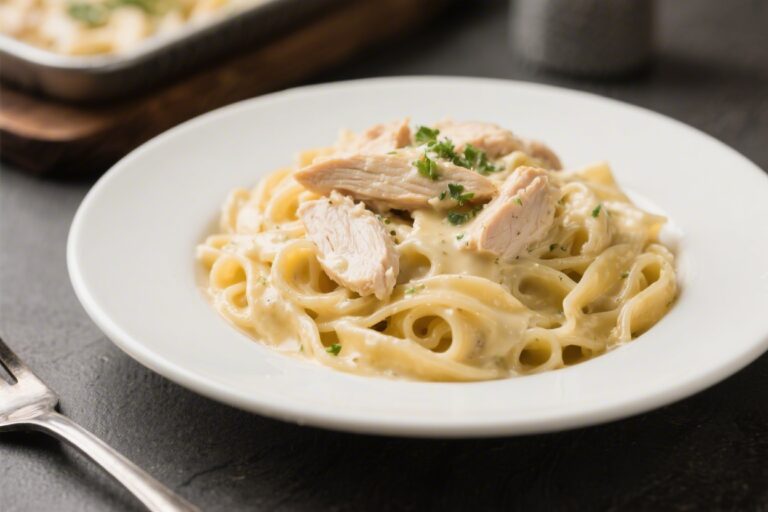
Creamy Pantry Pasta with Garlic & Butter – Simple, Cozy, and Ready Fast
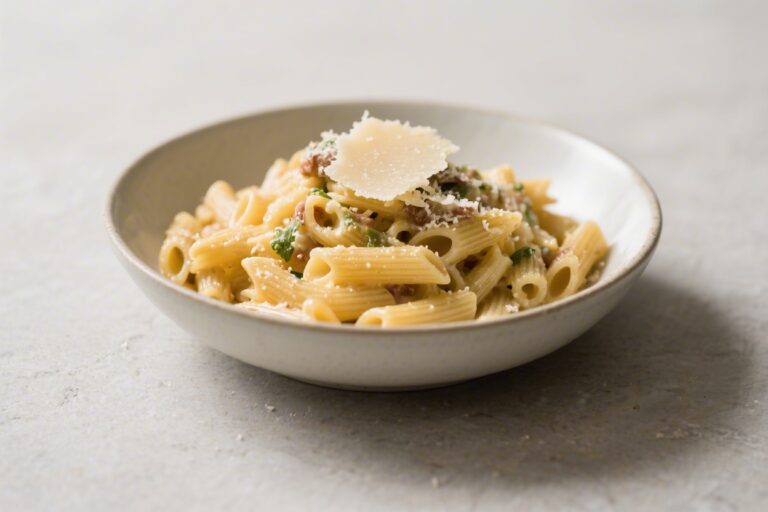
This is the weeknight pasta you reach for when the fridge is quiet and the craving for comfort is loud. A few pantry staples, a little butter, and plenty of garlic come together to make a silky, cozy bowl that tastes like you tried harder than you did. The sauce is creamy without being heavy, and the garlic brings just enough warmth.
It’s flexible, forgiving, and fast—perfect for a late dinner or an easy lunch. If you’ve got spaghetti, butter, garlic, and a splash of milk or cream, you’re 90% there.
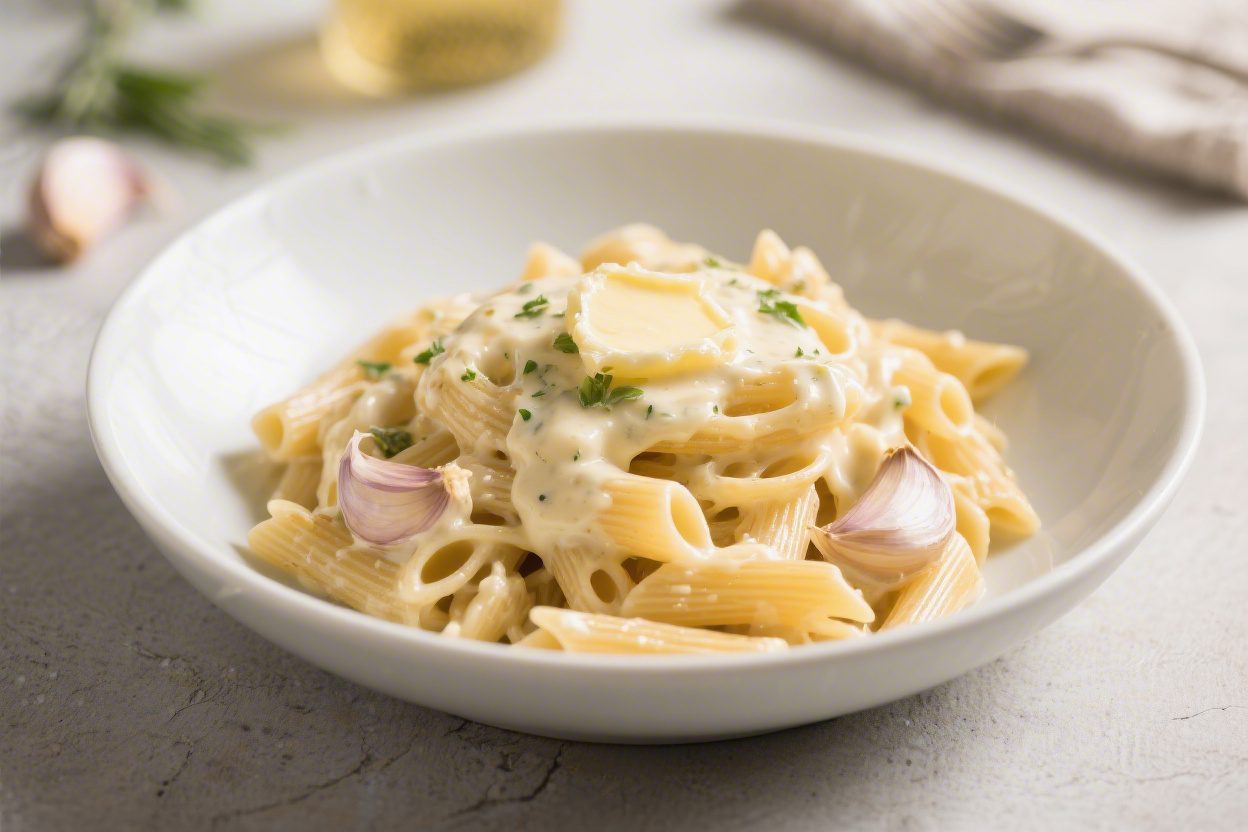
Ingredients
Method
- Boil the pasta: Bring a large pot of salted water to a boil. Add the pasta and cook until al dente. Reserve 1 to 1.5 cups of starchy pasta water before draining.
- Start the sauce base: In a wide skillet over medium heat, melt the butter with a splash of olive oil (optional, helps prevent scorching). Add the minced garlic and a pinch of red pepper flakes if using. Cook 60–90 seconds, just until fragrant. Do not brown the garlic.
- Build the creaminess: Lower the heat and pour in the milk, half-and-half, or cream. Whisk to combine with the butter-garlic mixture. Simmer gently for 1–2 minutes until slightly thickened.
- Season early: Add a good pinch of salt and several grinds of black pepper. Taste the sauce—this is where you set the foundation.
- Add cheese for body: Sprinkle in the grated Parmesan a little at a time, whisking until smooth. The sauce should be silky, not gloopy. If it tightens up, loosen with a splash of pasta water.
- Toss with pasta: Add the drained pasta straight into the skillet. Toss and toss again, adding reserved pasta water as needed until the sauce clings lightly to each strand. Glossy, not soupy is the goal.
- Brighten it up: Zest in a little lemon and add a small squeeze of juice if you like. Fold in chopped parsley or chives for freshness.
- Final taste check: Adjust salt, pepper, and heat (more red pepper flakes if you want). If it feels heavy, add a splash of pasta water or an extra squeeze of lemon.
- Serve immediately: Twirl into warm bowls and finish with extra Parmesan and a crack of black pepper.
What Makes This Special
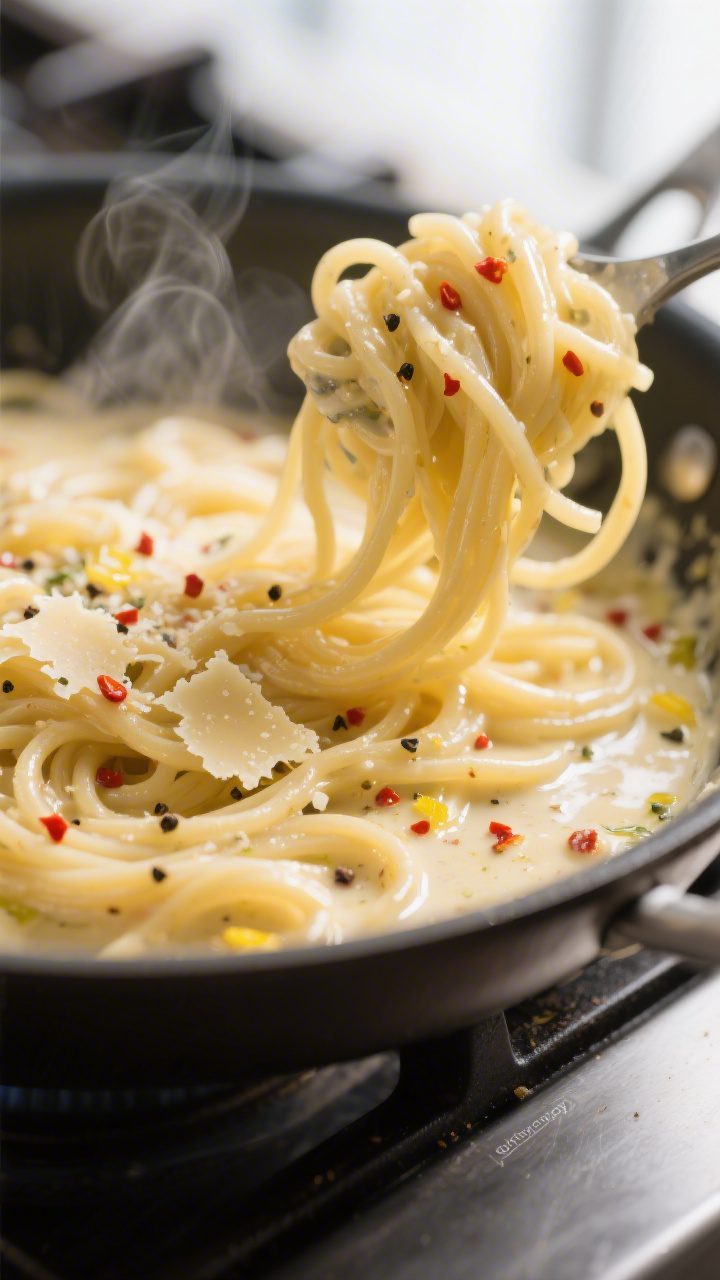
This pasta understands real life. It doesn’t ask for fancy cheese or a long grocery list.
It builds flavor from basics you already have and turns them into something satisfying.
- Simple ingredients, big payoff: Butter, garlic, and starchy pasta water make a lush base.
- Fast and flexible: On the table in about 20 minutes, easy to scale for one or four.
- Comfort without heaviness: Creamy texture with a clean, garlicky finish.
- Built for add-ins: Toss in peas, canned tuna, leftover chicken, or a handful of spinach.
Shopping List
- Spaghetti or linguine (8–12 ounces; any long pasta works)
- Unsalted butter (4 tablespoons; adjust to taste)
- Garlic (3–5 cloves, finely minced or grated)
- Milk, half-and-half, or cream (1/2 to 3/4 cup; use what you have)
- Grated Parmesan or Pecorino Romano (1/2 cup, plus extra for serving)
- Olive oil (1 tablespoon, optional for flavor)
- Red pepper flakes (a pinch, optional)
- Lemon (zest and a squeeze of juice, optional but brightens everything)
- Fresh parsley or chives (a small handful, optional for freshness)
- Salt and black pepper
Step-by-Step Instructions
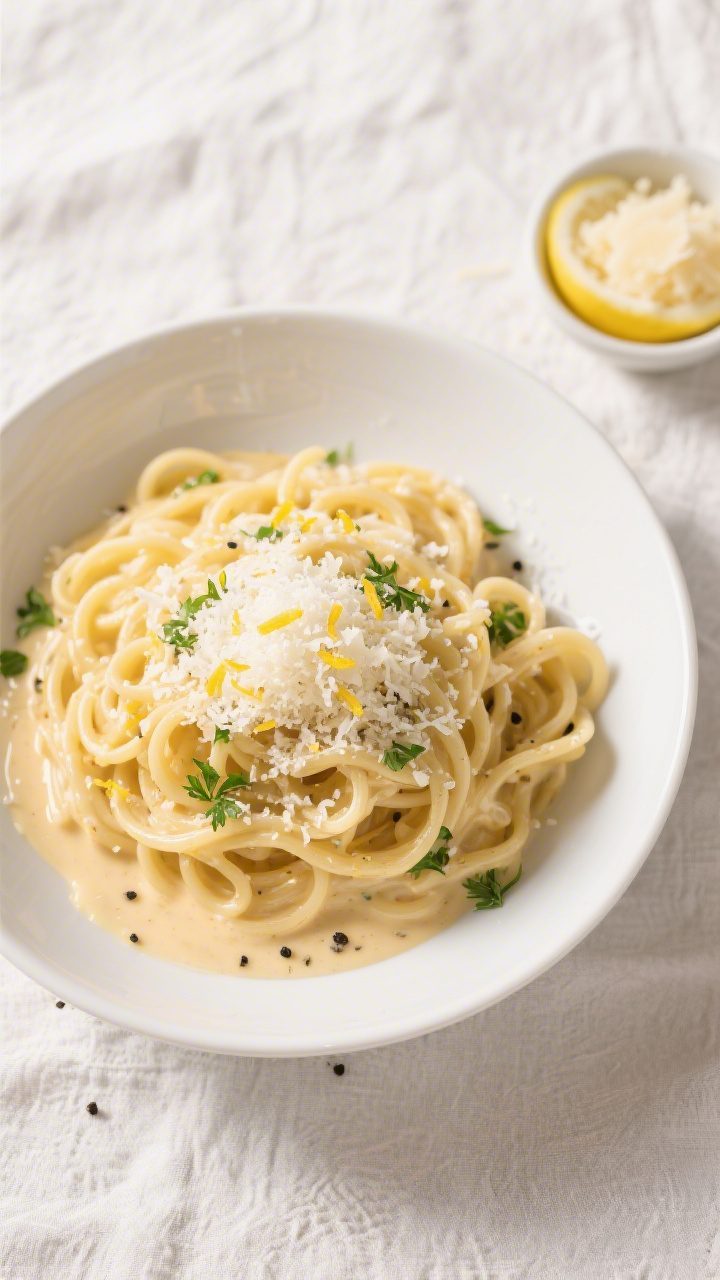
- Boil the pasta: Bring a large pot of salted water to a boil. Add the pasta and cook until al dente. Reserve 1 to 1.5 cups of starchy pasta water before draining.
- Start the sauce base: In a wide skillet over medium heat, melt the butter with a splash of olive oil (optional, helps prevent scorching). Add the minced garlic and a pinch of red pepper flakes if using.
Cook 60–90 seconds, just until fragrant. Do not brown the garlic.
- Build the creaminess: Lower the heat and pour in the milk, half-and-half, or cream. Whisk to combine with the butter-garlic mixture. Simmer gently for 1–2 minutes until slightly thickened.
- Season early: Add a good pinch of salt and several grinds of black pepper.
Taste the sauce—this is where you set the foundation.
- Add cheese for body: Sprinkle in the grated Parmesan a little at a time, whisking until smooth. The sauce should be silky, not gloopy. If it tightens up, loosen with a splash of pasta water.
- Toss with pasta: Add the drained pasta straight into the skillet.
Toss and toss again, adding reserved pasta water as needed until the sauce clings lightly to each strand. Glossy, not soupy is the goal.
- Brighten it up: Zest in a little lemon and add a small squeeze of juice if you like. Fold in chopped parsley or chives for freshness.
- Final taste check: Adjust salt, pepper, and heat (more red pepper flakes if you want). If it feels heavy, add a splash of pasta water or an extra squeeze of lemon.
- Serve immediately: Twirl into warm bowls and finish with extra Parmesan and a crack of black pepper.
Keeping It Fresh
Creamy sauces are best enjoyed right away, but leftovers can still be great.
Store in an airtight container in the fridge for up to 3 days. Reheat gently on the stove with a splash of water or milk to loosen the sauce—stir patiently until it turns glossy again. If you’re meal-prepping, cook the pasta a minute shy of al dente so it holds up better when reheated.
Why This is Good for You
- Balance and comfort: You get satisfying carbs, some protein from the cheese and milk, and the option to add greens or canned fish for extra nutrients.
- Garlic perks: Garlic adds aroma and may offer heart-friendly compounds, especially when lightly cooked.
- Customizable: You control the richness—use milk for a lighter bowl or cream for a splurge.
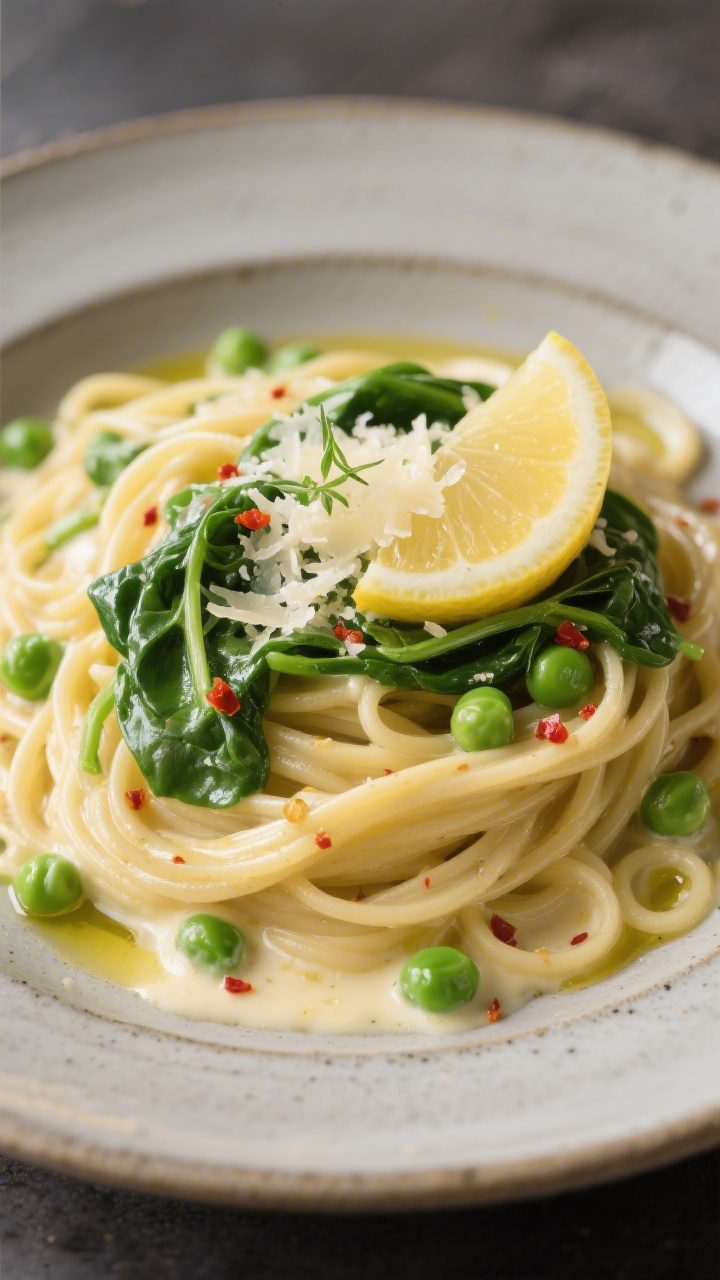
Add peas, spinach, or arugula to bring in fiber and color.
- Portion-friendly: This dish scales easily, so you can keep servings in check or stretch it for a crowd.
What Not to Do
- Don’t scorch the garlic: Burnt garlic turns bitter and will dominate the sauce.
- Don’t skip the pasta water: It’s the secret to a silky, emulsified sauce that clings to the noodles.
- Don’t add cheese all at once: Dumping it in can cause clumps. Sprinkle gradually and whisk.
- Don’t crank the heat with dairy: Boiling milk or cream can split the sauce. Keep it gentle.
- Don’t overcook the pasta: It will turn mushy and soak up too much sauce.
Alternatives
- Dairy swaps: Use all milk for a lighter version or all cream for extra richness.
Oat milk or unsweetened almond milk works in a pinch—add a bit more cheese to help the sauce thicken.
- Protein add-ins: Canned tuna, rotisserie chicken, crispy bacon, or chickpeas. Warm in the sauce right before tossing with pasta.
- Veggie boosts: Frozen peas, baby spinach, blistered cherry tomatoes, or sautéed mushrooms. Add them after the garlic or fold in at the end.
- Gluten-free: Use a sturdy gluten-free pasta and reserve extra pasta water—GF starch helps emulsify the sauce.
- Citrus and herb twist: Try lemon-thyme, parsley-chive, or a touch of dill with lemon zest for a fresh spin.
- Cheese change-up: Pecorino for a saltier bite, mascarpone for creaminess, or a spoon of ricotta stirred in at the end.
FAQ
Can I make this without cream?
Yes.
Use milk or half-and-half and lean on the pasta water and Parmesan to build body. Simmer gently and add cheese gradually until the sauce turns silky.
What if my sauce splits or looks grainy?
Lower the heat and whisk in a splash of warm pasta water to bring it back together. Add a small knob of butter and keep whisking until smooth.
Avoid boiling once dairy is in the pan.
How salty should the pasta water be?
It should taste like the sea—salty but not harsh. This seasons the pasta from within and means you’ll need less salt later.
Can I make it ahead?
It’s best fresh, but you can cook the pasta a minute shy of al dente and keep the sauce components ready. Reheat sauce gently, then toss with pasta and pasta water just before serving.
What pasta shape works best?
Long strands like spaghetti or linguine are classic, but short shapes like shells or cavatappi catch the sauce well too.
Use what you have.
Is there a way to make it more lemony?
Absolutely. Add extra zest to the sauce and finish with an additional squeeze of lemon at the end. Keep tasting to balance richness and brightness.
How can I make it spicier?
Bloom more red pepper flakes in the butter, or finish with a drizzle of chili oil.
Taste as you go so the heat doesn’t overpower the garlic.
Can I use pre-shredded cheese?
You can, but it may not melt as smoothly due to anti-caking agents. For the best texture, grate cheese fresh if possible.
What if I’m out of Parmesan?
Pecorino Romano is great. In a pinch, a spoon of cream cheese or mascarpone can add body, and a dash of nutritional yeast brings a savory note.
How do I prevent clumping when tossing the pasta?
Work with hot pasta, a warm sauce, and add pasta water in small splashes while tossing constantly.
Keep the pan over low heat to help everything emulsify.
In Conclusion
Creamy Pantry Pasta with Garlic & Butter is the kind of recipe you keep in your back pocket. It’s flexible, fast, and deeply comforting without being fussy. With good seasoning, gentle heat, and a little pasta water magic, you get a bowl that feels special any night of the week.
Keep the staples on hand, and you’ll always have a delicious plan when dinner sneaks up on you.
Printable Recipe Card
Want just the essential recipe details without scrolling through the article? Get our printable recipe card with just the ingredients and instructions.