Pantry Tomato Pasta (5 Ingredients) – Simple, Comforting, and Fast
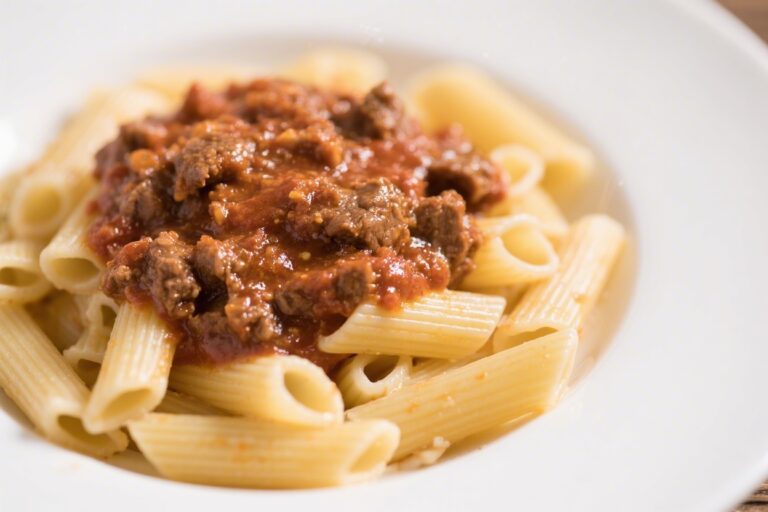
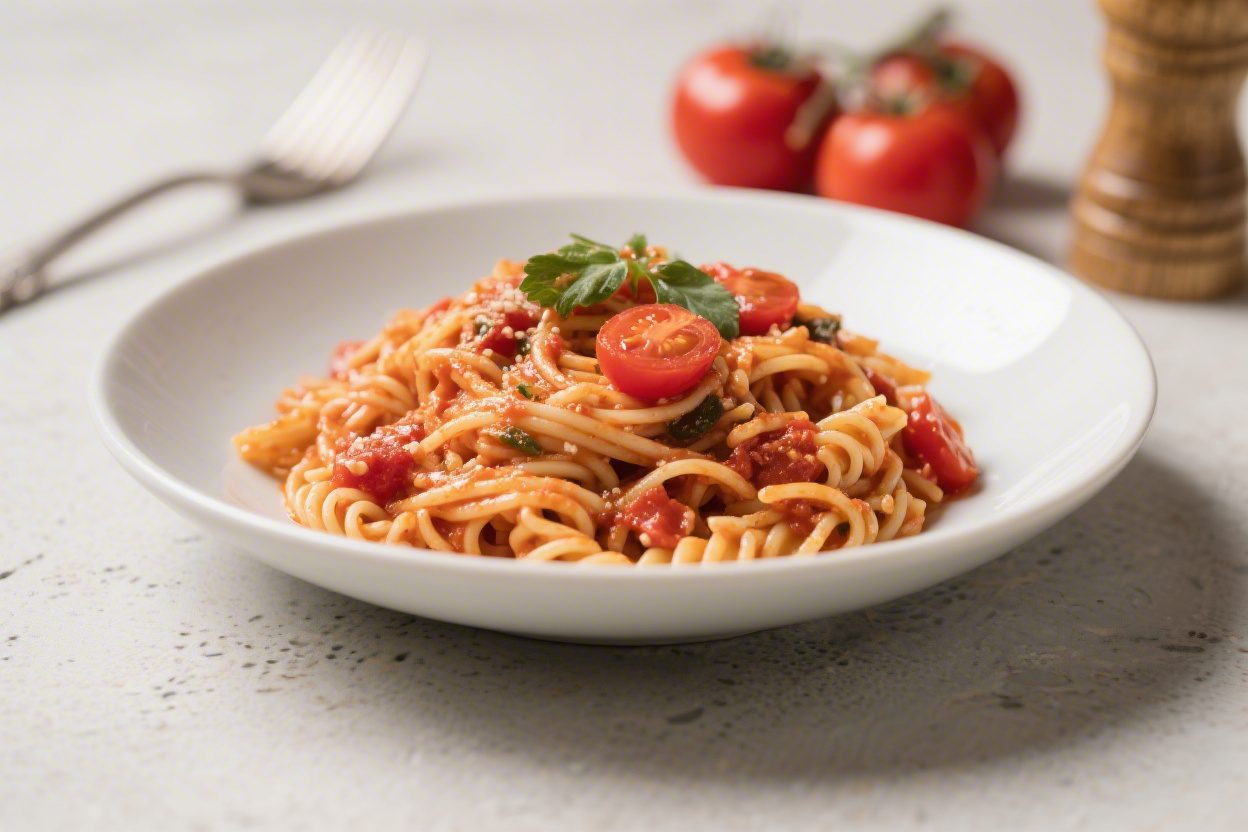
This is the kind of pasta you make when the fridge is nearly empty, dinner needs to happen now, and you still want it to taste like a real meal. Pantry Tomato Pasta uses just five basic ingredients, but it comes out silky, savory, and deeply satisfying. You don’t need fancy tomatoes or cheese—though a sprinkle never hurts.
With a few smart tricks, you’ll get a sauce that clings to the noodles and tastes slow-cooked, even on a weeknight. Keep this one in your back pocket for busy nights and late-night cravings alike.
Ingredients
Method
- Salt the pasta water generously. Bring a large pot of water to a rolling boil and add enough salt to make it taste like the sea. This is your main seasoning for the pasta itself.
- Cook the pasta until just shy of al dente. Check the package directions and pull it 1–2 minutes early. Reserve 1–1.5 cups of starchy pasta water before draining.
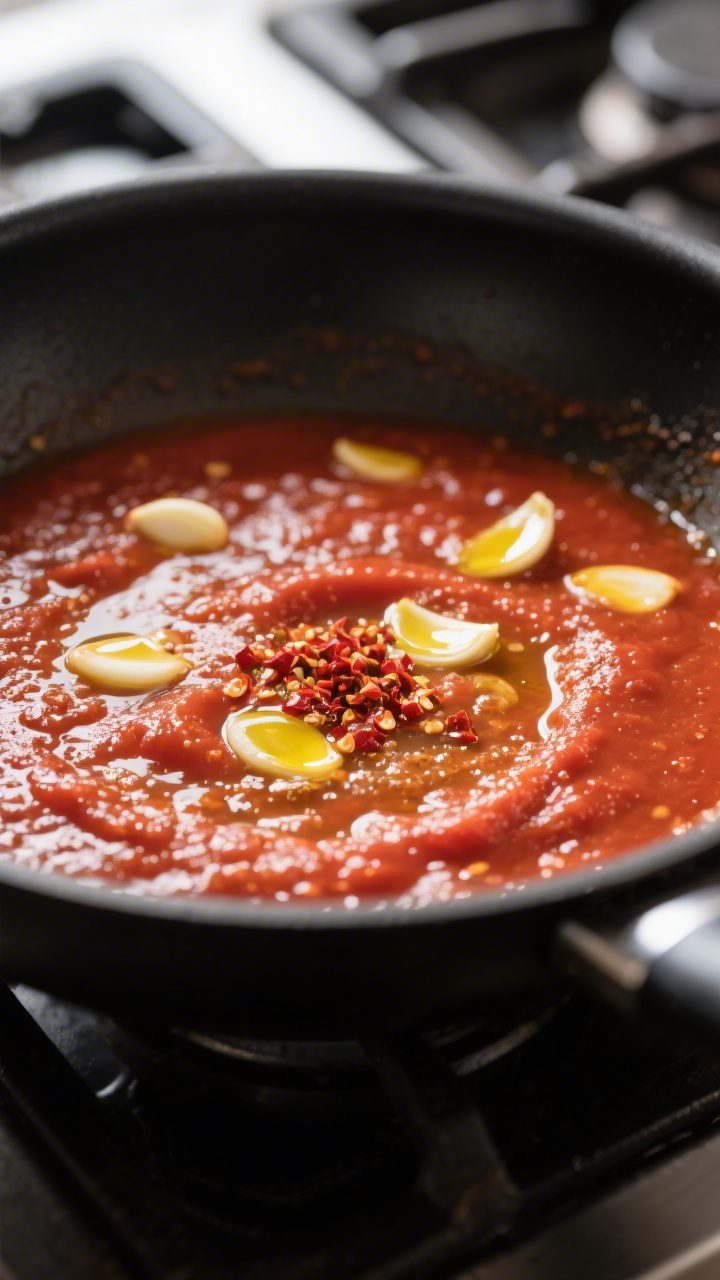
- Warm the olive oil and bloom the garlic. In a large skillet, heat 2–3 tablespoons olive oil over medium heat. Add thinly sliced or minced garlic. Cook gently for 60–90 seconds, stirring, until fragrant and just starting to turn golden at the edges. Don’t let it brown.
- Add the tomatoes and simmer. Pour in your canned tomatoes. If using whole peeled, crush them with a spoon. Season with 1/2 teaspoon salt to start. Let the sauce simmer on medium-low for 8–10 minutes, stirring occasionally, until slightly thickened and glossy.
- Balance the flavor. Taste the sauce. If it’s a bit sharp, add a pinch of sugar or an extra drizzle of olive oil. Adjust salt. Optional: add a pinch of red pepper flakes.
- Marry the pasta and sauce. Add the drained pasta to the skillet with the sauce. Toss for 1–2 minutes over medium heat, splashing in reserved pasta water a little at a time until the sauce becomes silky and clings to the noodles.
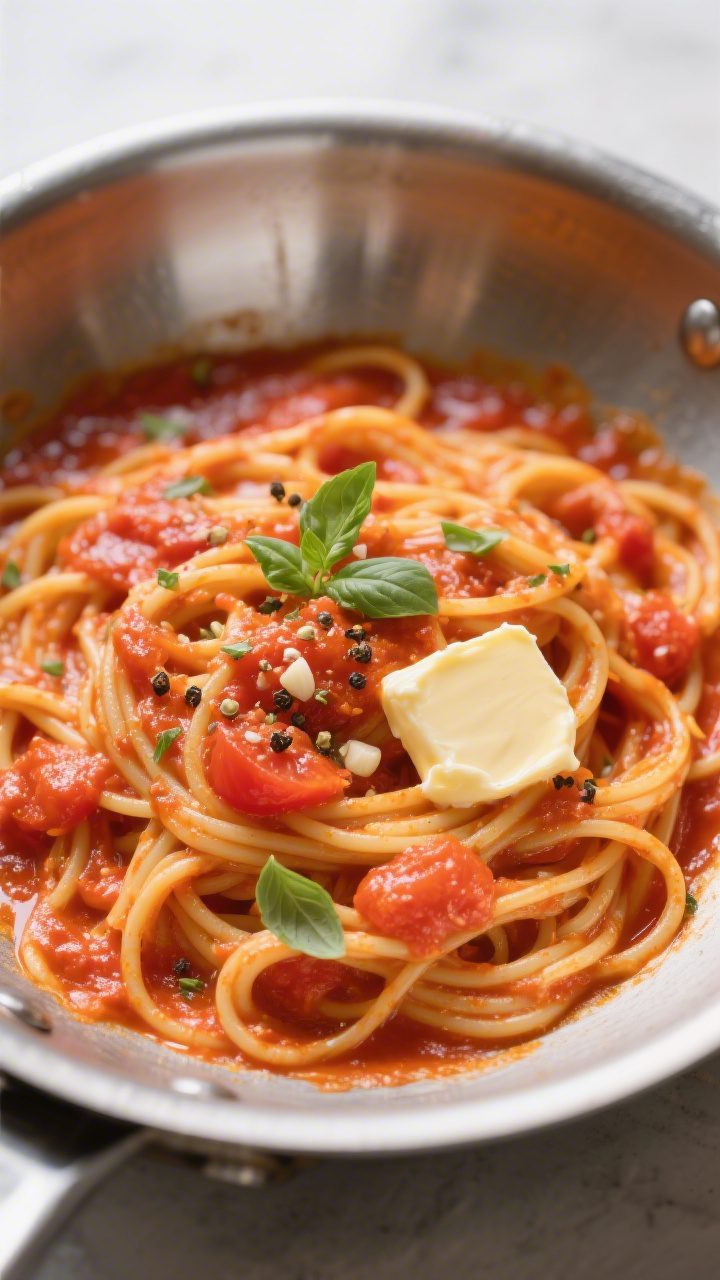
- Finish and serve. Taste and adjust salt again. Optional: crack in some black pepper, add a knob of butter for extra gloss, or sprinkle with basil or Parmesan. Serve hot.
What Makes This Recipe So Good
- Only five ingredients. You likely have them right now: pasta, canned tomatoes, garlic, olive oil, and salt. That’s it.
- Big flavor with small effort. Lightly caramelized garlic and well-salted pasta water deliver a rich, restaurant-style finish.
- Budget-friendly and flexible. Use any pasta shape you’ve got.
Whole tomatoes, crushed, or passata all work.
- Ready in about 20 minutes. Boil pasta, simmer sauce, toss together. Dinner done.
- Scales easily. Cooking for one or six? Double or halve without fuss.
Shopping List
- Pasta: 12 ounces (340 g) of spaghetti, linguine, or short pasta like penne or rigatoni
- Canned tomatoes: 1 can (14–28 ounces) crushed, diced, or whole peeled tomatoes
- Garlic: 3–4 cloves
- Olive oil: Extra-virgin preferred
- Salt: For seasoning and salting the pasta water
Optional but nice: red pepper flakes, black pepper, a pinch of sugar, fresh basil, Parmesan, or butter.
These don’t count toward the five if you want to keep it strict, but add them if you have them.
Step-by-Step Instructions
- Salt the pasta water generously. Bring a large pot of water to a rolling boil and add enough salt to make it taste like the sea. This is your main seasoning for the pasta itself.
- Cook the pasta until just shy of al dente. Check the package directions and pull it 1–2 minutes early. Reserve 1–1.5 cups of starchy pasta water before draining.
- Warm the olive oil and bloom the garlic. In a large skillet, heat 2–3 tablespoons olive oil over medium heat.
Add thinly sliced or minced garlic. Cook gently for 60–90 seconds, stirring, until fragrant and just starting to turn golden at the edges. Don’t let it brown.
- Add the tomatoes and simmer. Pour in your canned tomatoes.
If using whole peeled, crush them with a spoon. Season with 1/2 teaspoon salt to start. Let the sauce simmer on medium-low for 8–10 minutes, stirring occasionally, until slightly thickened and glossy.
- Balance the flavor. Taste the sauce.
If it’s a bit sharp, add a pinch of sugar or an extra drizzle of olive oil. Adjust salt. Optional: add a pinch of red pepper flakes.
- Marry the pasta and sauce. Add the drained pasta to the skillet with the sauce.
Toss for 1–2 minutes over medium heat, splashing in reserved pasta water a little at a time until the sauce becomes silky and clings to the noodles.
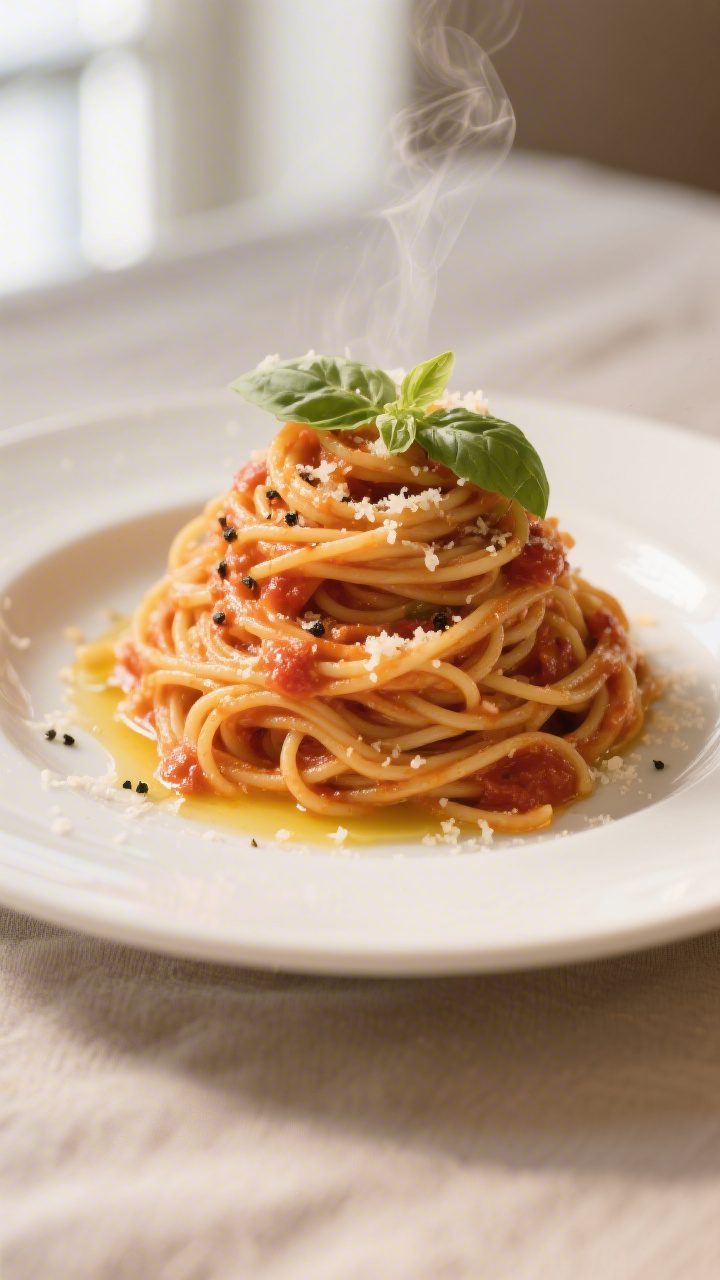
- Finish and serve. Taste and adjust salt again. Optional: crack in some black pepper, add a knob of butter for extra gloss, or sprinkle with basil or Parmesan. Serve hot.
How to Store
- Refrigerator: Store leftovers in an airtight container for up to 3–4 days.
- Freezer: The sauce freezes well for up to 3 months.
Freeze pasta and sauce separately for the best texture.
- Reheat: Warm gently on the stove with a splash of water to loosen the sauce. Add a drizzle of olive oil at the end to refresh the flavor.
Why This is Good for You
- Tomatoes are nutrient-rich. Canned tomatoes are packed with lycopene, vitamin C, and antioxidants. Cooking actually helps your body absorb lycopene better.
- Olive oil supports heart health. It adds healthy fats and improves absorption of fat-soluble nutrients from the tomatoes.
- Simple carbs, but easy to balance. Pair with a side salad or add chickpeas or tuna for protein and fiber if you like.
- Low in processed additives. You control the salt and skip added sugars found in many jarred sauces.
Common Mistakes to Avoid
- Under-salting the pasta water. If the water isn’t salty, your dish will taste flat no matter how good the sauce is.
- Burning the garlic. Browned or burnt garlic turns bitter.
Keep the heat moderate and watch it closely.
- Skipping the pasta water. That starchy, salty water is your secret to a glossy, emulsified sauce. Don’t drain it all away.
- Overcooking the pasta. Pull it early and finish in the sauce so it absorbs flavor and keeps a pleasant bite.
- Not tasting and adjusting. Canned tomatoes vary. Taste and tweak salt, acid, and richness as needed.
Variations You Can Try
- Spicy Arrabbiata-Style: Add 1/2–1 teaspoon red pepper flakes with the garlic.
- Creamy Tomato: Swirl in a splash of heavy cream or a spoonful of mascarpone at the end.
- Herby: Stir in torn basil, parsley, or a pinch of dried oregano during the last minute of cooking.
- Umami Boost: Add a small spoon of tomato paste with the garlic, or a splash of anchovy oil, or a pat of butter at the end.
- Protein Add-Ins: Toss in drained canned tuna, white beans, or sautéed shrimp for a heartier meal.
- Roasted Garlic Twist: If you have it, mash a few cloves of roasted garlic into the sauce for sweetness and depth.
- Veggie Lift: Fold in a handful of spinach or thawed peas during the final minute.
FAQ
Which canned tomatoes work best?
Use what you have.
San Marzano-style whole peeled tomatoes offer a lush texture, but crushed or diced tomatoes are great too. If using whole tomatoes, crush them by hand or with a spoon for a rustic sauce.
Can I make this gluten-free?
Yes. Use a gluten-free pasta you like and watch the timing—GF pasta can overcook quickly.
Reserve pasta water the same way; it still helps the sauce cling.
What if my sauce tastes too acidic?
Add a small pinch of sugar, a drizzle of olive oil, or finish with a pat of butter. Simmering a couple minutes longer also softens sharp edges.
Do I need onion?
No. Garlic alone keeps the recipe fast and clean-tasting.
If you want a sweeter, rounder base, sauté finely chopped onion before adding the tomatoes.
Can I use fresh tomatoes?
Yes, in peak season. Use ripe tomatoes, grate or chop them, and simmer a bit longer to concentrate the flavors. You may need an extra pinch of salt since fresh tomatoes can be milder.
How much salt should I add to the pasta water?
As a guide, use about 1–1.5 tablespoons of kosher salt per 4 quarts of water.
It should taste noticeably salty, like seawater.
What if I don’t have olive oil?
Use neutral oil plus a small pat of butter at the end for flavor. Olive oil is classic, but this swap still works well.
Can I make it ahead?
You can make the sauce up to 3 days ahead and refrigerate it. Cook the pasta fresh, then combine with the warmed sauce and pasta water right before serving.
Wrapping Up
Pantry Tomato Pasta proves that simple ingredients can deliver big comfort.
With good olive oil, garlic, and a can of tomatoes, you can have a rich, flavorful dinner in minutes. Keep these basics on hand, trust your taste buds, and use pasta water like a secret weapon. Whether you stick to the five-ingredient core or riff with add-ins, this is a no-stress recipe you’ll make again and again.
Printable Recipe Card
Want just the essential recipe details without scrolling through the article? Get our printable recipe card with just the ingredients and instructions.