Chai Latte (Stovetop) – Cozy, Spiced, and Simple
Chai at home hits differently. It’s warm, aromatic, and feels like a small ritual you can actually fit into your morning. This stovetop chai latte brings together black tea, whole spices, and creamy milk in one pot—no fancy tools needed.
You control the sweetness, the spice level, and the strength. It’s simple, soothing, and so satisfying.
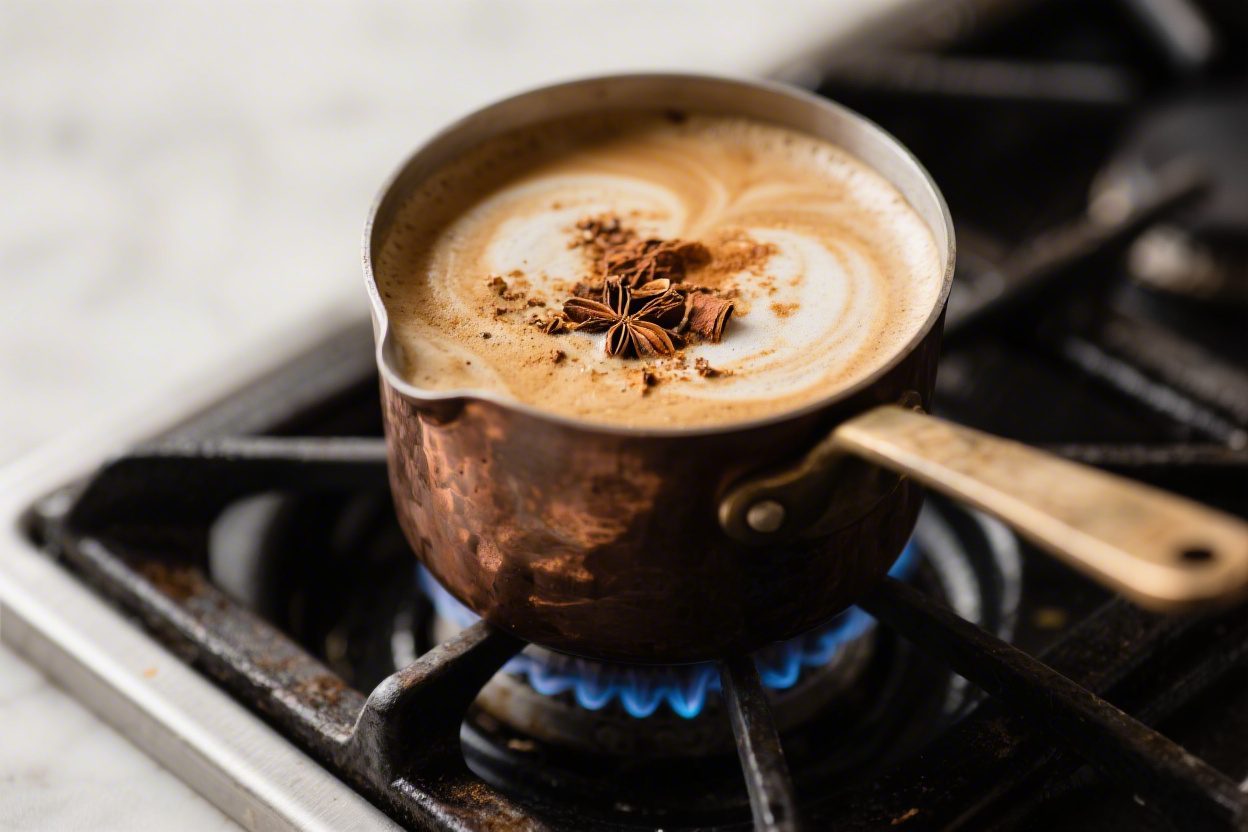
Ingredients
Method
- Lightly crush the spices: Use the side of a knife or a mortar and pestle to crack the cardamom pods and peppercorns. Don’t pulverize—just open them up.
- Bloom the spices: In a small saucepan, add water, ginger, cardamom, cinnamon stick, cloves, and peppercorns. Bring to a gentle boil, then reduce to a lively simmer for 5–7 minutes until fragrant.
- Add the tea: Stir in the black tea. Simmer for 2–3 minutes for medium strength, or up to 4 minutes for bolder chai. Avoid rolling boils with the tea to prevent bitterness.
- Add milk and sweetener: Pour in the milk and add your sweetener. Return to a gentle simmer. Watch closely—milk can boil over quickly.
- Simmer and stir: Let it bubble softly for 2–4 minutes, stirring occasionally. Taste and adjust sweetness or spice by simmering a bit longer if you want it stronger.
- Optional froth: Whisk vigorously off heat for 15–20 seconds to build a light froth, or use a handheld frother.
- Strain and serve: Strain through a fine sieve into mugs. Add a pinch of ground cinnamon or a drop of vanilla if you like.
What Makes This Recipe So Good
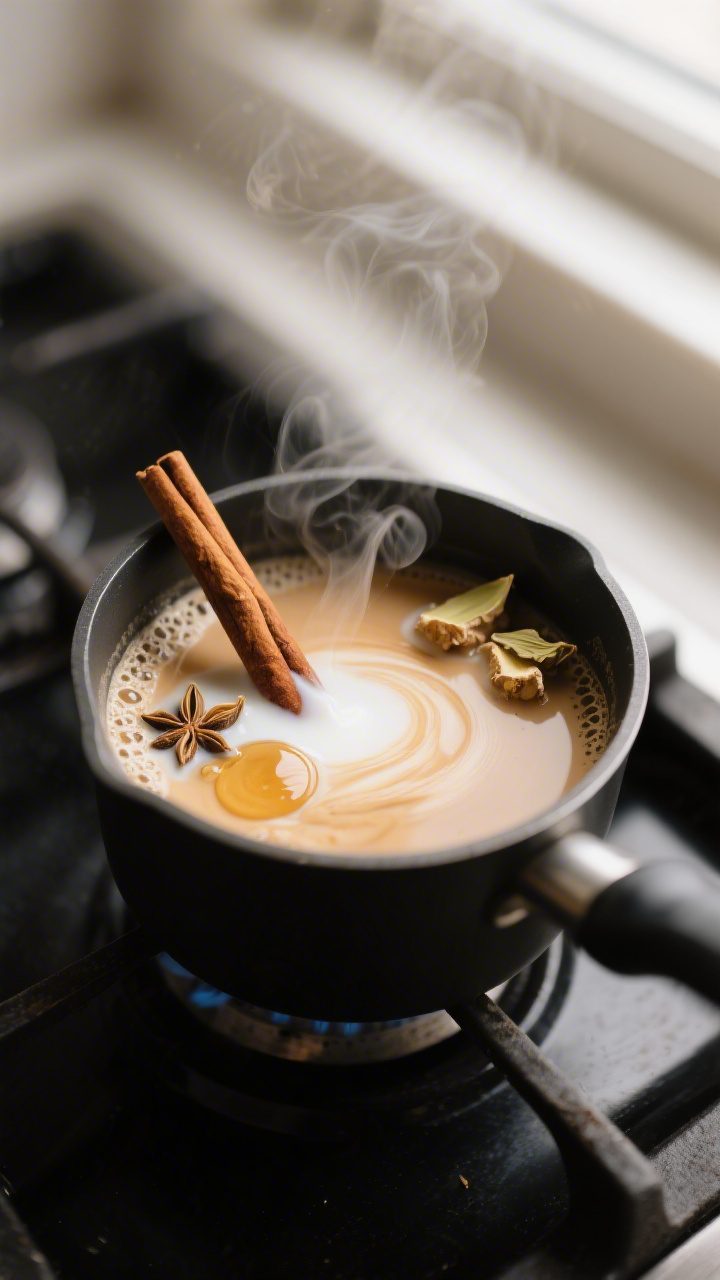
- Balanced flavor: The blend of whole spices, black tea, and milk is comforting without being overly sweet or heavy.
- Customizable: Make it bold and peppery, or mellow and floral. Adjust spices, milk type, and sweetener to taste.
- Simple method: Everything happens in one pot.
No espresso machine, no syrup prep, just a gentle simmer.
- More aroma, less bitterness: Briefly blooming the spices and controlling the simmer keeps flavors round and smooth.
- Budget-friendly: A week’s worth of chai for less than the cost of one café latte.
What You’ll Need
- Black tea: 2–3 teaspoons loose-leaf Assam or 2 black tea bags (Assam, English breakfast, or Darjeeling blend).
- Water: 1 cup (240 ml) for steeping the tea and spices.
- Milk: 1 cup (240 ml). Whole milk is classic; oat, soy, or almond milk also work.
- Sweetener: 1–2 tablespoons sugar, honey, or maple syrup, to taste.
- Fresh ginger: 4–6 thin slices or 1 tablespoon grated.
- Green cardamom pods: 5–6, lightly crushed.
- Cinnamon stick: 1 small stick (or 1/2 teaspoon ground in a pinch).
- Whole cloves: 3–4.
- Black peppercorns: 4–6, lightly crushed (for gentle heat).
- Optional extras: A small piece of star anise, a pinch of fennel seeds, or a grating of nutmeg.
- Vanilla (optional): A few drops of vanilla extract for a softer finish.
How to Make It

- Lightly crush the spices: Use the side of a knife or a mortar and pestle to crack the cardamom pods and peppercorns. Don’t pulverize—just open them up.
- Bloom the spices: In a small saucepan, add water, ginger, cardamom, cinnamon stick, cloves, and peppercorns.
Bring to a gentle boil, then reduce to a lively simmer for 5–7 minutes until fragrant.
- Add the tea: Stir in the black tea. Simmer for 2–3 minutes for medium strength, or up to 4 minutes for bolder chai. Avoid rolling boils with the tea to prevent bitterness.
- Add milk and sweetener: Pour in the milk and add your sweetener.
Return to a gentle simmer. Watch closely—milk can boil over quickly.
- Simmer and stir: Let it bubble softly for 2–4 minutes, stirring occasionally. Taste and adjust sweetness or spice by simmering a bit longer if you want it stronger.
- Optional froth: Whisk vigorously off heat for 15–20 seconds to build a light froth, or use a handheld frother.
- Strain and serve: Strain through a fine sieve into mugs.
Add a pinch of ground cinnamon or a drop of vanilla if you like.
How to Store
- Refrigerate: Store strained chai latte in an airtight jar for up to 3 days. Spices continue to infuse a bit, so flavor may deepen.
- Reheat gently: Warm on the stovetop over low heat, stirring to prevent scorching. Avoid boiling to keep the milk from curdling or separating.
- Make-ahead concentrate: Simmer just the water, tea, and spices (no milk).
Strain and refrigerate up to 5 days. Mix 1:1 with hot milk when serving.

Why This is Good for You
- Spices with benefits: Ginger may help with digestion, cardamom can support fresh breath and digestion, and cinnamon and cloves have antioxidant properties.
- Gentle caffeine: Black tea offers a moderate caffeine lift, often easier on the system than coffee.
- Custom control: Adjust sweetness and milk type to suit your goals—use less sugar or choose a fortified plant milk for added calcium and vitamin D.
- Mindful ritual: The slow simmer and fragrant steam make a soothing break in your day.
Common Mistakes to Avoid
- Boiling the milk hard: High heat can cause scorching or a split texture. Keep it to a gentle simmer.
- Oversteeping the tea: Tea can get bitter past 4–5 minutes at high heat.
Add milk shortly after the tea goes in to cushion the tannins.
- Skipping the spice bloom: Tossing spices straight into milk dulls flavor. Simmer them in water first for a brighter, cleaner aroma.
- Using only ground spices: They can be muddy and hard to strain. If you must use ground, cut the amounts in half and strain very well.
- Not crushing pods: Whole, uncracked cardamom and peppercorns won’t release enough flavor.
Alternatives
- Dairy-free: Oat milk gives a creamy body; soy is neutral and stable; almond is lighter with a nutty note.
Choose a barista-style for better froth.
- Sweeteners: Honey adds floral warmth, brown sugar leans caramel, and maple brings a toasty depth. Start with less, taste, then adjust.
- Tea swaps: For lighter chai, use Darjeeling or a Ceylon blend. For extra body, Assam is best.
Decaf black tea works too.
- Spice profile: Add star anise and fennel for a licorice note; more pepper for heat; extra ginger for zing; a pinch of nutmeg for softness.
- Iced chai: Make a stronger concentrate, chill, then pour over ice with cold milk. Sweeten slightly more to account for dilution.
FAQ
Can I make this without whole spices?
Yes. Use a chai spice blend or ground spices in small amounts.
Start with 1/4 teaspoon ground cinnamon, 1/8 teaspoon ground cardamom, a small pinch each of clove and black pepper, and 1/2 teaspoon grated fresh ginger. Simmer gently and strain well.
What’s the best tea for chai?
Assam is classic for its malty strength and ability to stand up to milk and spices. English breakfast also works.
Avoid very delicate teas like white tea, which can get lost in the mix.
How do I prevent a skin forming on top?
Keep the chai moving with a gentle stir while it simmers and after you pour. If a skin forms, just whisk or strain—it won’t affect flavor much.
Can I make a big batch for guests?
Absolutely. Multiply the recipe and use a larger pot.
Keep it at the gentlest simmer and stir often so milk doesn’t catch on the bottom. Strain just before serving.
Is there a way to make it spicier without bitterness?
Yes. Increase ginger and black pepper slightly and extend the spice simmer before adding tea.
Keep the tea steep time moderate and let the milk simmer a bit longer for body.
Why add spices to water first, not milk?
Water helps extract sharp, bright flavors from the spices. Once milk goes in, it softens and rounds those edges. This two-step method gives you both clarity and creaminess.
Can I use evaporated milk or condensed milk?
Evaporated milk adds extra richness; use half evaporated milk and half water or regular milk.
Sweetened condensed milk works too—skip other sweeteners and add to taste.
How much caffeine is in a cup?
A typical serving has roughly 40–60 mg of caffeine, depending on tea strength and steep time. Using decaf black tea keeps the flavor with minimal caffeine.
In Conclusion
A stovetop chai latte is simple, fragrant, and endlessly adaptable. With a few whole spices, good black tea, and gentle heat, you’ll have a cozy cup that tastes like home.
Adjust the sweetness, lean into your favorite spices, and make it yours. Once you’ve tried it, you’ll wonder why you ever waited in line.
Printable Recipe Card
Want just the essential recipe details without scrolling through the article? Get our printable recipe card with just the ingredients and instructions.